Consider receiving, pallets, racks and zoning together with the quality requirements of different materials.
Scope: Examples concern industrial warehouses and workshops in eastern Thailand, including Chonburi, Rayong and Chachoengsao. Operational arrangements must reflect your factory’s goods, processes and actual records.
First check whether pallets and packaging are dry

Cartons, wooden pallets and stretch film arriving in rain may carry moisture. Assess exterior and interior dryness separately: wood and cartons may remain damp inside, and tightly wrapped film may trap water. Isolate, assess and treat wet packaging before deciding whether to store or repack it.
Do not conceal damp packaging with a new layer of film. For food ingredients, also inspect contamination, unusual odors, packaging integrity and product quality requirements. A normal appearance alone is insufficient for release.
Keep goods off the floor, leave passageways and avoid leaks

Use suitable racks or pallets to reduce contact between bottom-layer packaging and standing floor water. Leave space beside walls for inspection and cleaning, and avoid roof leaks, direct cold-air streams and splash-prone entrances. Set clearances according to rack loads, logistics and fire protection requirements rather than copying a universal number.
Do not let tall stacks obstruct temperature/humidity sensors, dehumidifier inlets or outlets, or fire protection facilities. Conditions in the middle and bottom of stacks and beside walls may differ from aisles; inspections should cover these locations.
Separate wet and dry areas
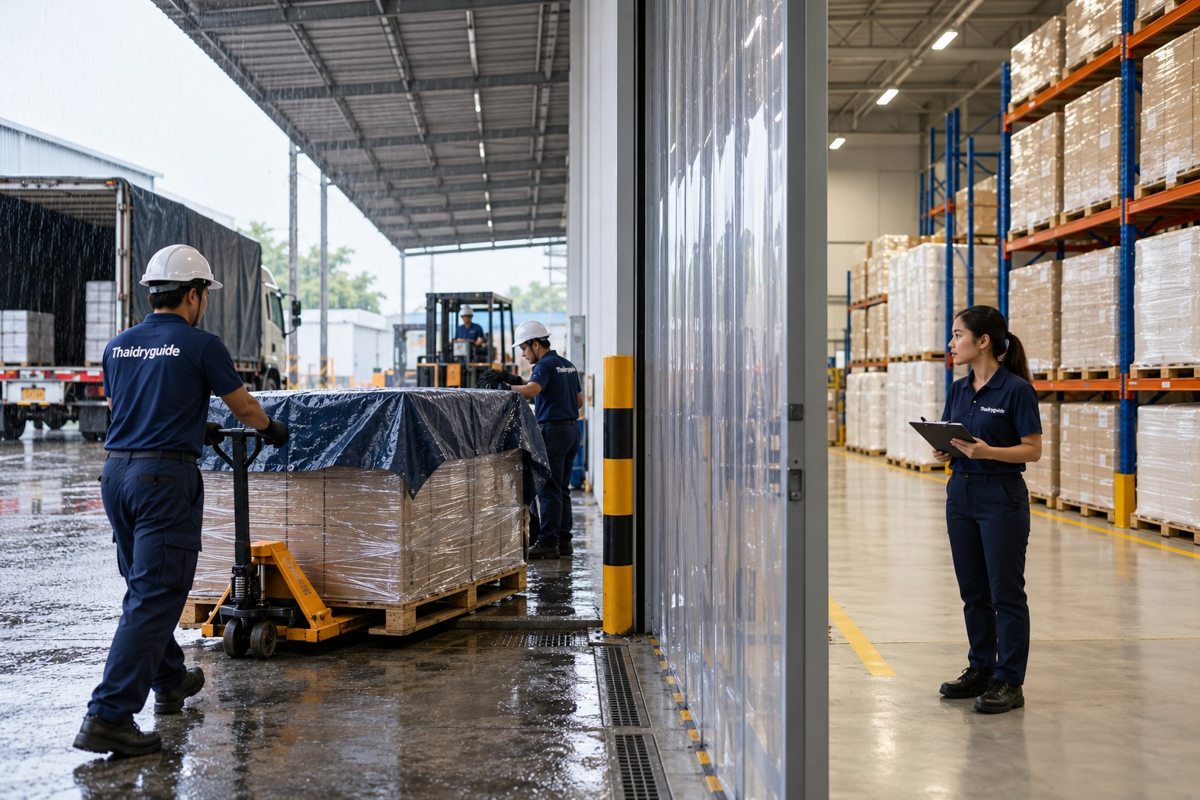
Define boundaries for incoming goods awaiting inspection, temporary wet-pallet storage, dry packaging and finished goods. Confirm washed tools and floors are dry before restarting dry packaging operations. Workers and handling equipment must not carry rainwater from outside all the way into the finished-goods area.
Use first-in, first-out or first-expire, first-out according to product requirements. Inspect bottom and wall-side packaging whenever goods are moved. This helps reduce losses more effectively than leaving goods untouched until dampness is discovered at dispatch.
For cartons and packaging materials, consider moisture absorption and strength

Cartons may soften after absorbing moisture, reducing their stacking capacity. Check compression at the bottom, softened board, bonded areas and packaging integrity. Keep spare materials dry and manage them according to suppliers’ storage conditions, stacking limits and stock rotation plans.
A film’s water-vapor barrier depends on its material, thickness and seal. Ordinary stretch wrap is not a long-term sealed moisture-barrier package. Where barrier packaging is needed, confirm material performance and sealing methods before considering a suitable quantity of desiccant.
For pulses and powders, assess the product itself
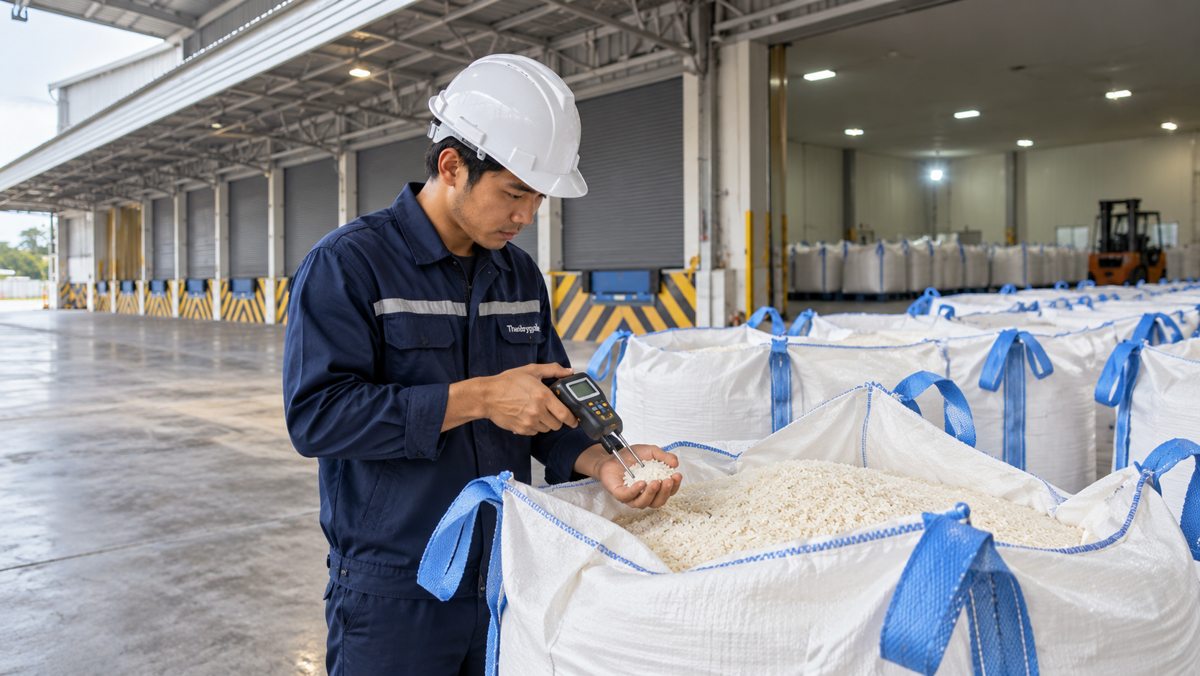
Ambient RH describes air conditions only; it cannot replace moisture-content testing of pulses or powders, water activity where needed, or quality testing. Initial raw-material moisture, package seals, storage temperature and time all affect mold or caking risk. Use product specifications and acceptance requirements confirmed by the quality department; do not release goods based on touch or a single RH reading.
First isolate food ingredients exposed to water, mold or unusual odors. Do not simply dry them and mix them with unaffected goods; quality personnel must assess contamination and appropriate disposal or treatment. Desiccants must suit the packaging application and be separated from food. Handle broken bags or leaks through the quality procedure.
For metals and equipment, consider condensation and protection

For metal parts, watch for surface water films, contaminants and existing rust. Choose corrosion-prevention packaging, surface protection and dry conditions to suit the material and application. After exposure to sea salt or process residues, corrosion may remain a risk even if air humidity falls.
Cold equipment or parts may develop condensation when moved from air-conditioned to hot, humid areas. Allow temperature equalization under appropriate packaging protection and measure actual conditions; do not apply one fixed waiting time to every size and material. Inspect damp electrical equipment according to manufacturer requirements; do not energize it merely because its exterior is dry.
Humidity, dew point and cargo moisture-damage principles primarily follow TIS. Confirm equipment selection and operation against manufacturer data and actual site conditions.