Review the full picture: site conditions, operating performance, drainage, maintenance and electricity savings.
Scope: Examples concern industrial warehouses and workshops in eastern Thailand, including Chonburi, Rayong and Chachoengsao. Operational arrangements must reflect your factory’s goods, processes and actual records.
Give suppliers a site conditions brief

Prepare room length, width and height, its use, temperature/humidity records, target range, door-opening frequency, occupancy and exhaust airflow. Include moisture sources such as wet pallets, washing, steam or damp raw materials, plus on-site electricity, drainage and available installation space.
An enclosed small warehouse and a frequently opened workshop of the same area may have very different moisture loads. State purchasing requirements as “what result must be achieved under these conditions”, rather than simply “one machine for this many square meters”.
Compare capacity under actual operating conditions
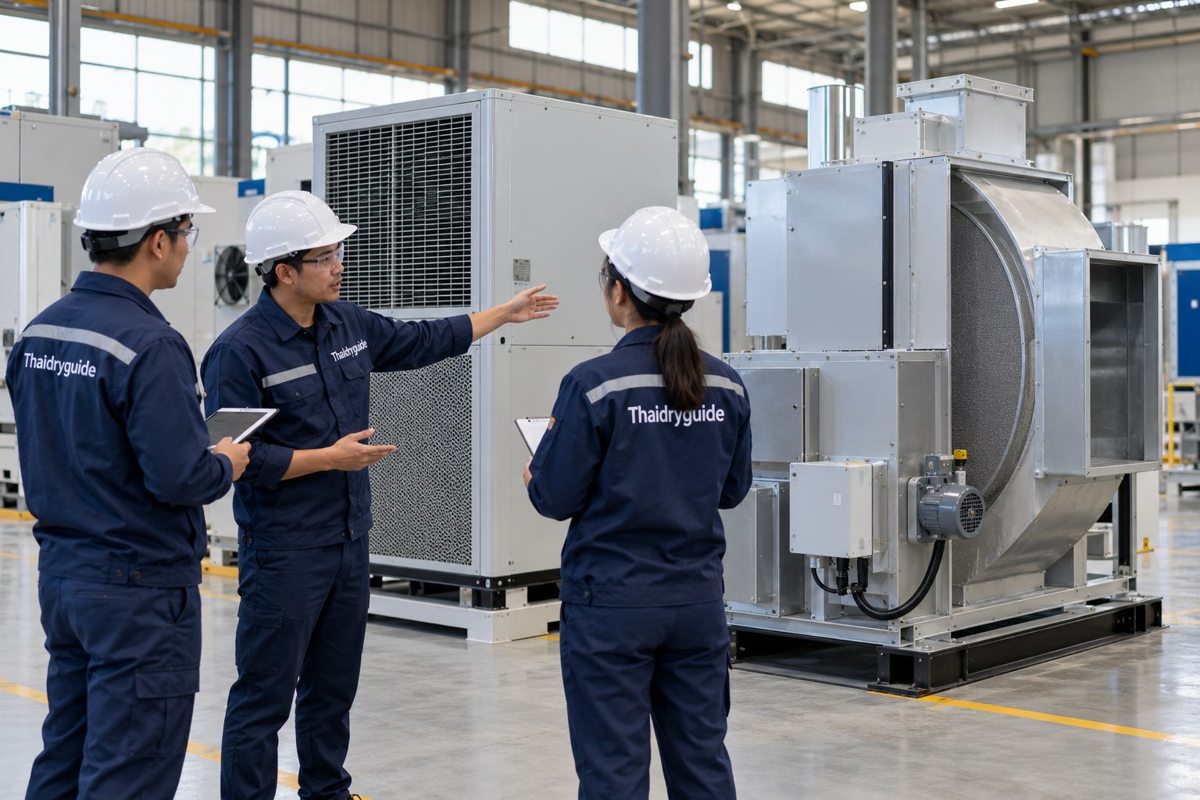
Refrigerant equipment cools air to condense moisture. Rotary desiccant systems use adsorbent material and remove moisture through regeneration. Selection depends on temperature, target dew point, operating environment and available energy; no single type is best for every condition.
Rated daily water removal usually refers to specified test temperature and humidity. Request performance data, power consumption and control ranges at your factory’s operating temperature and target humidity. Performance may differ at low humidity or low temperatures. For rotary desiccant equipment, also confirm regeneration heat, moist-air discharge and duct arrangements.
Include acceptance criteria in the trial run

Agree on measuring points, instruments, target ranges, door-opening schedules, trial duration and operating-cost records. Acceptance should cover representative production shifts and moisture loads, rather than only an hour in an empty room with no people and closed doors.
Continuous heavy loading in the first few days may reflect drying of walls, goods and floors, but may also mean undersized equipment or incoming outdoor moisture. Use continuous records to find the cause before deciding whether to add capacity. A large amount of water in the collection bucket alone does not prove that the solution is suitable.
Keep airflow unobstructed and drainage reliable

Leave the clearances required by the equipment instructions and prevent goods from blocking inlets and outlets. Air must reach the target area. Large stacks or partitions may create damp corners, requiring assessment of airflow or zoning. Do not direct discharge air at a separate humidity probe, which would produce overly optimistic readings.
Condensate drainage must resist blockage and leakage and meet equipment requirements for slope, traps or lift pumps. Test drainage first and check for backflow and leaks even after shutdown. Drain pipes must not create trip hazards or discharge water into passageways.
Set maintenance frequency according to the site load
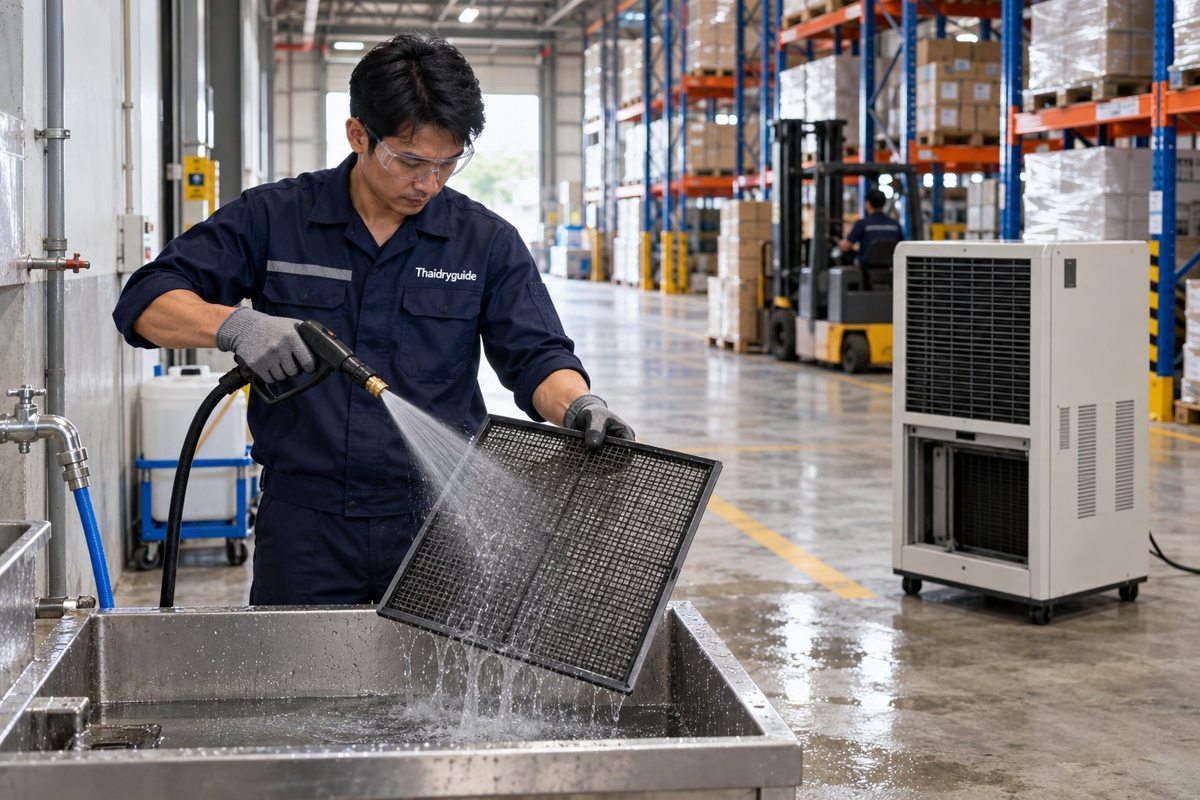
Inspect filters, heat exchangers, air passages, rotors and drainage components according to the manufacturer’s requirements. Dusty workshops may need more frequent checks; observe how quickly actual clogging occurs before setting intervals. A dehumidifier does not replace production dust extraction and should not be placed in a combustible-dust hazard zone without assessment.
Before maintenance, shut down and isolate energy according to equipment requirements. Record operating hours, alarms, cleaning and component abnormalities instead of servicing only after a complete failure. General staff can inspect appearance and status; appropriate personnel should handle internal electrical checks.
Reduce moisture loads before focusing on electricity savings
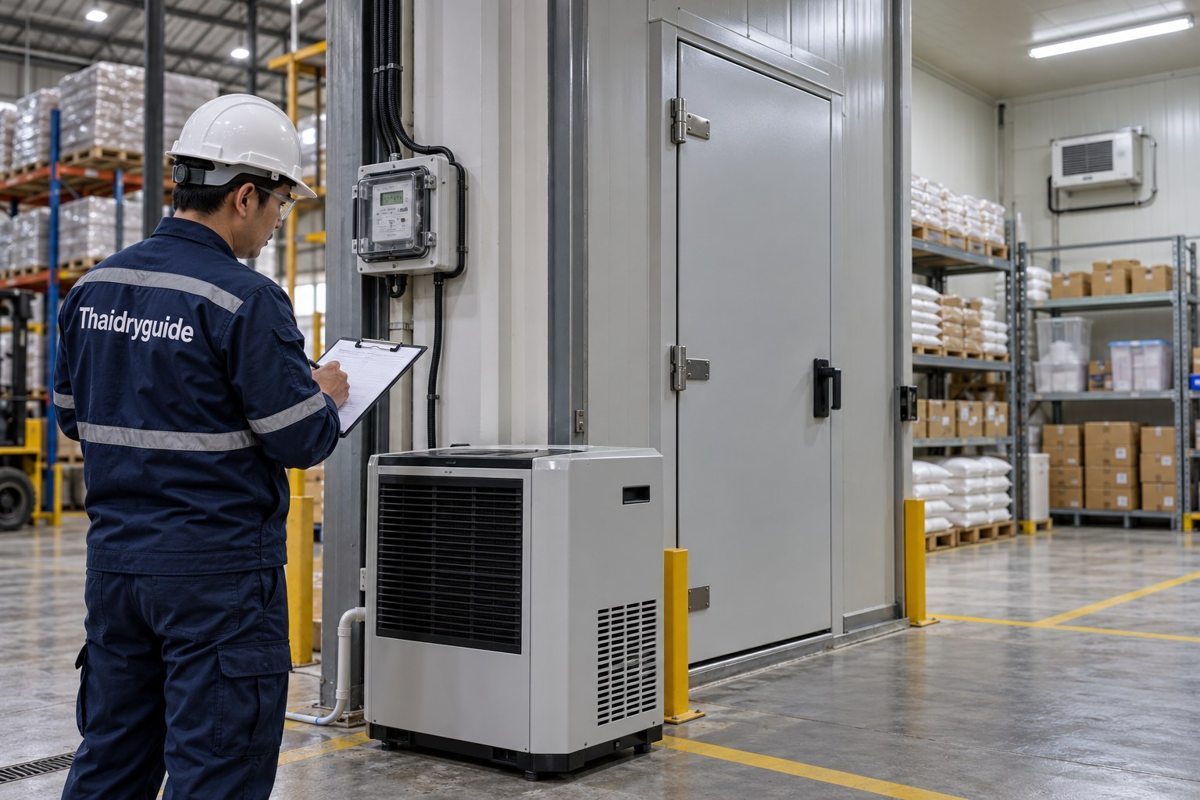
Repairing leaks, controlling door openings, isolating wet pallets and optimizing dry zones are often more useful than blindly lowering the humidity setting. Set targets according to cargo requirements; excessively low targets may increase electricity use or affect some materials and processes.
Record electricity consumption, time within the humidity target and production conditions together. Compare the same shifts or similar weather. Low electricity bills while humidity fails to meet requirements do not indicate successful energy savings. Verify by trial whether reduced night-time load or scheduled operation can be used without affecting goods or next-day production.
Humidity, dew point and cargo moisture-damage principles primarily follow TIS. Confirm equipment selection and operation against manufacturer data and actual site conditions.