Separate status and moisture sources so that packaging protection connects with warehouse protection.
Scope: Examples concern industrial businesses in eastern Thailand, including Chonburi, Rayong and Chachoengsao. Apply them in conjunction with site conditions and product requirements.
Separate goods awaiting inspection from released goods
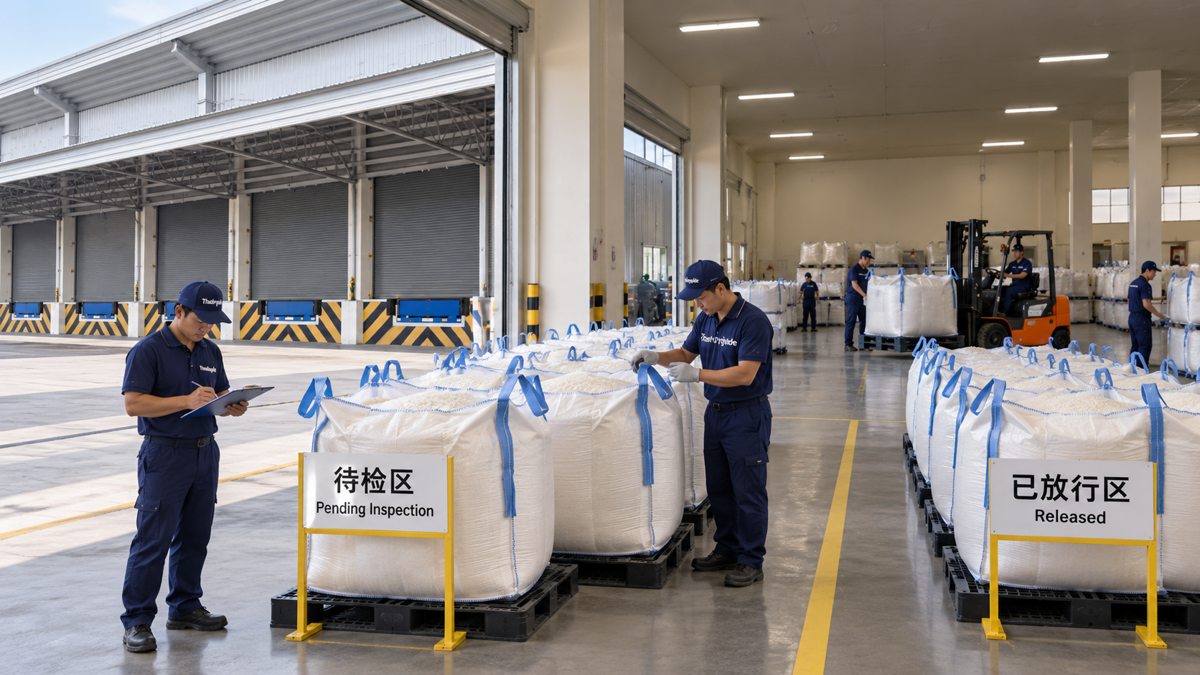
Provide locations for goods awaiting inspection, accepted goods, abnormalities and returns, with clear batch and status identification. Identify rain-wet packaging, wet pallets and condensation when cold goods enter a warm area at receiving, rather than mixing them directly into dry-packaging and finished-goods areas.
Set storage conditions according to product and packaging requirements. Beans, powders, cartons and metal parts have different sensitivities; one RH target cannot cover them all, and air-conditioned room temperature alone is not a sufficient criterion.
Watch open containers and holding time for work in progress
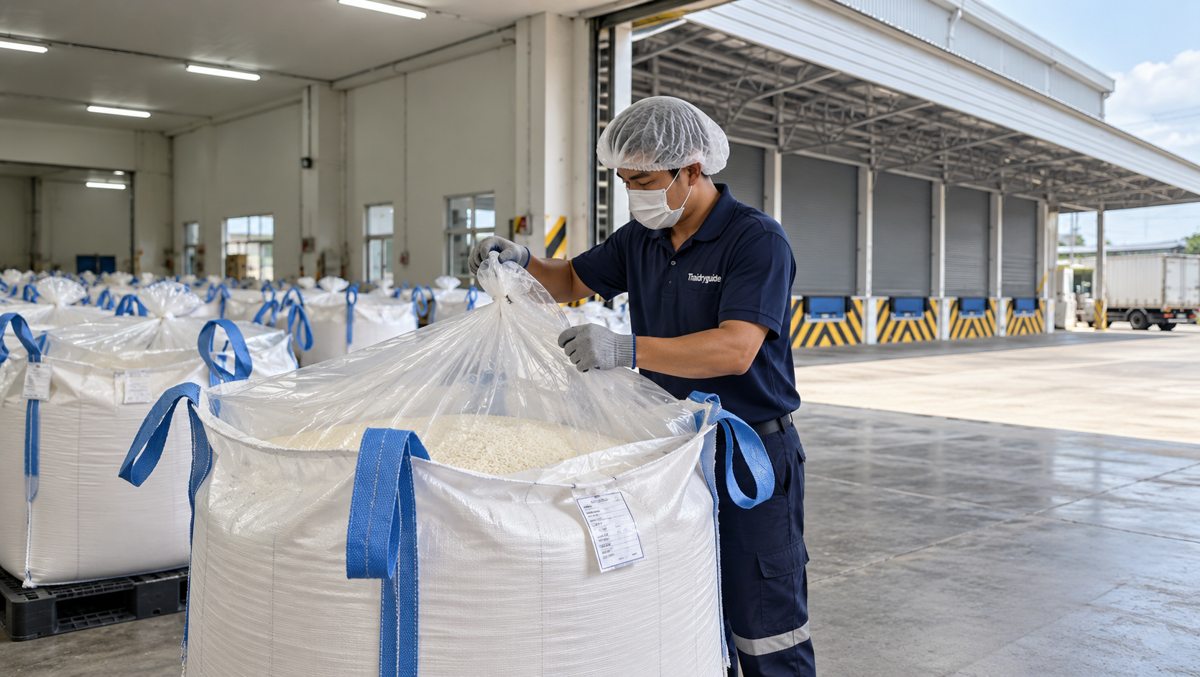
Leaving transfer bins, bulk bags and material awaiting packing open for long periods increases opportunities for moisture uptake, foreign matter and contamination. Arrange covers, labeling and acceptable holding times according to the process. Materials and utensils touching the product must suit their purpose.
When production pauses or shifts change, confirm how work in progress is protected. Do not cover products directly with wet cleaning tools or damp outer bags. If abnormal delays exceed the original arrangement, assess them under quality procedures.
Check lower layers and wall-side spaces in finished-goods areas too
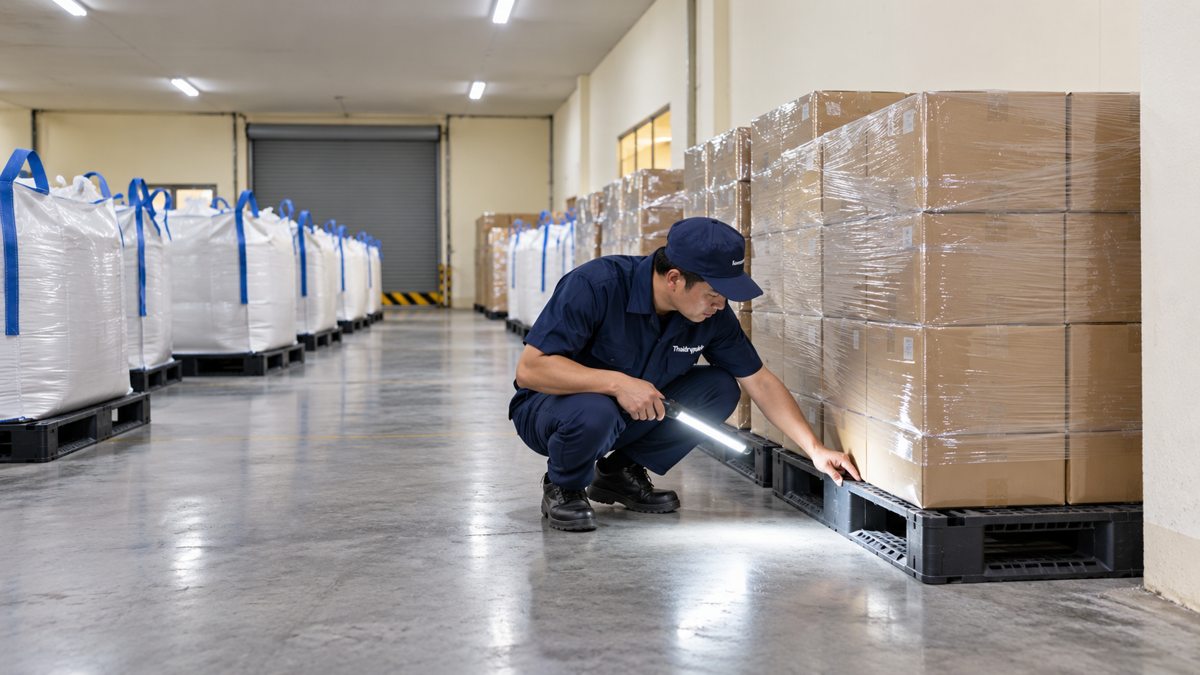
Use suitable racks or pallets to keep goods off the floor. Retain cleaning, inspection and safety aisles, and avoid leaks, doorway splashes and condensation drips. Set spacing and stacking according to facilities, package load capacity and fire requirements rather than copying a universal number.
Rotate stock by an appropriate method such as first in, first out or first expired, first out. Regularly inspect bottom cartons, liners and batch status. Record temperature and humidity trends and abnormal periods. Isolate moisture-damaged goods first rather than concealing them by rewrapping.
Main reference: the TIS/GDV packaging handbook. Confirm food-contact suitability, sealing parameters and storage life against product and material specifications.