Distinguish liquid water, water vapor and seals, and choose according to actual storage and transport conditions.
Scope: Examples concern industrial businesses in eastern Thailand, including Chonburi, Rayong and Chachoengsao. Apply them in conjunction with site conditions and product requirements.
Stopping rain does not mean stopping water vapor
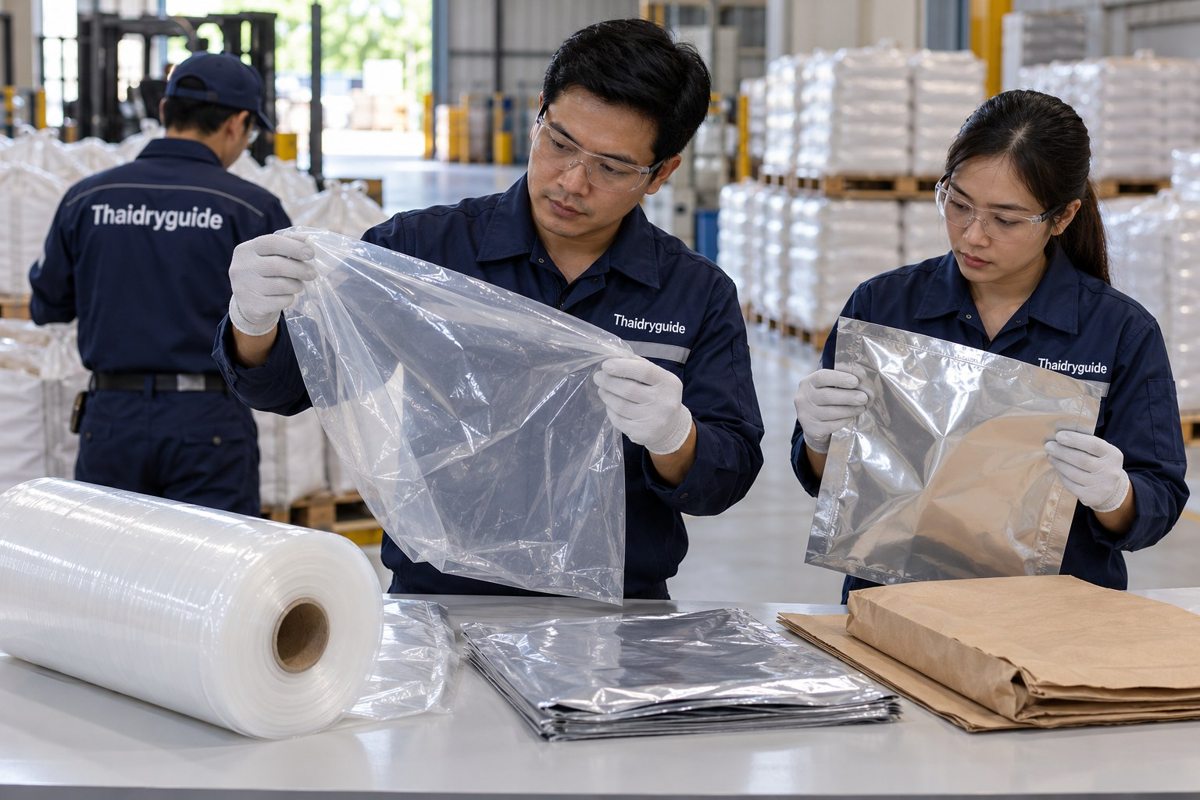
Packaging that stops brief splashes is not necessarily suitable as a long-term water-vapor barrier. Films, laminates, paper bags and liners have different moisture transmission properties. Bag mouths, seams and pinholes also affect the complete packaging system.
Ask suppliers for material structure, thickness and water-vapor transmission-rate data. When comparing them, check test temperature, humidity, units and methods. Values measured under different conditions cannot be ranked directly, and complete-package performance after sealing must still be validated in use.
Define requirements according to cargo and storage duration
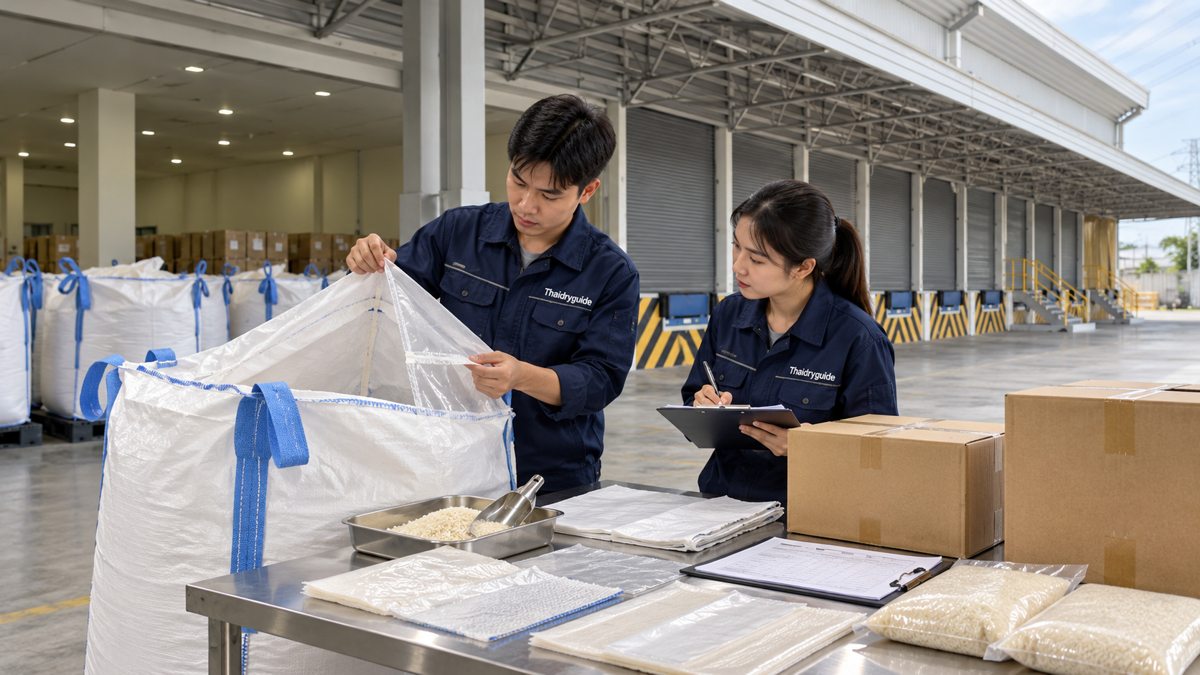
First explain whether the cargo is vulnerable to moisture uptake, water loss, corrosion or caking, then specify storage duration, environment and opening arrangements. Thailand’s humid rainy season, marine temperature cycles and moving cold cargo into warm, humid areas can impose different requirements. Do not choose solely on the lowest bag price.
For food use, confirm material suitability and supplier documentation. Vacuum mainly changes the gas and pressure inside packaging; it does not automatically make the material a high-barrier package or remove moisture already present in the product.
Begin with small-batch trials
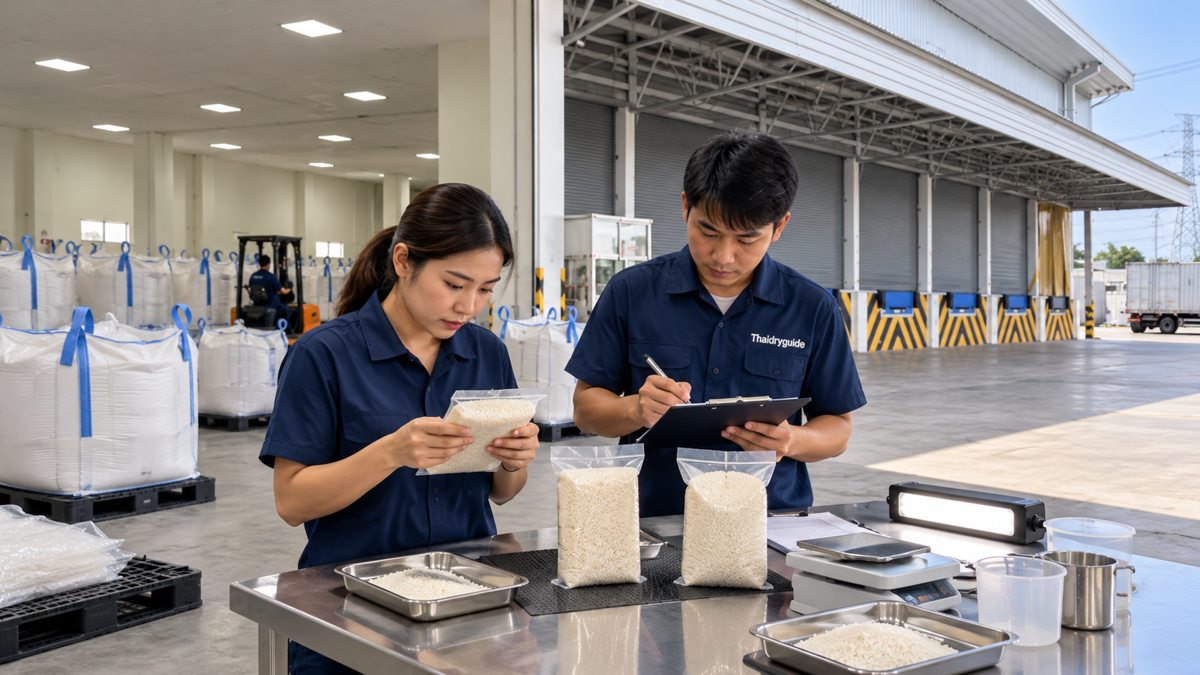
Compare candidate packaging using the same product and representative storage conditions. Record appearance, quality indicators, seals and damage, adding longer-duration or transport validation where necessary. Passing one material specification does not confirm the storage performance of the complete package.
Define the protective functions of liners, outer bags, cartons and pallets. Ordinary stretch film mainly stabilizes cargo and should not be treated as a long-term sealed moisture barrier without validation. Investigate materials and seals separately when moisture damage occurs.
Main reference: the TIS/GDV packaging handbook. Confirm food-contact suitability, sealing parameters and storage life against product and material specifications.