Check both the condition before sealing and package integrity afterwards.
Scope: Examples concern industrial businesses in eastern Thailand, including Chonburi, Rayong and Chachoengsao. Apply them in conjunction with site conditions and product requirements.
Prepare the packing area and materials first
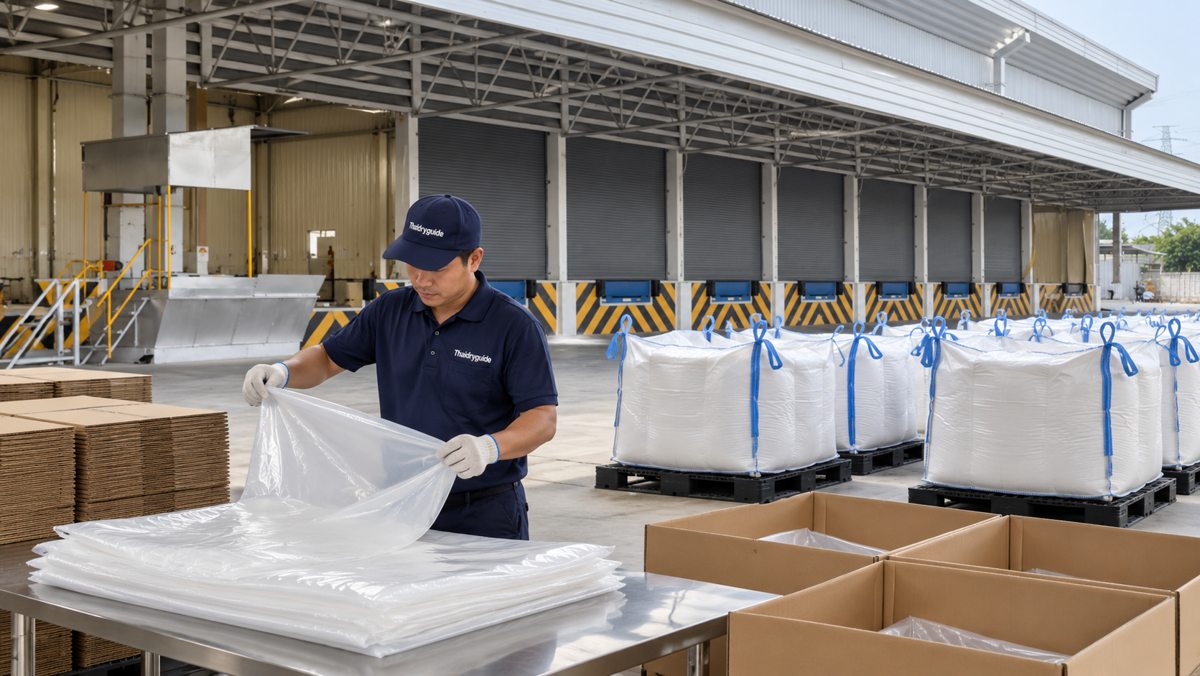
Confirm that bags, liners, cartons and pallets have not been exposed to rain; isolate damaged or damp materials first. Keep dripping water, direct splashes and moisture from wet cleaning away from the packing area. Clear arrangements for product preparation and waiting time after opening bags help reduce exposure.
Confirm product condition against its requirements before packing. Sealing wet product in a high-barrier bag may simply trap water inside. If cold product develops condensation in a hot, humid area, follow the quality procedure first rather than sealing to conceal the abnormality.
Confirm sealing parameters for the material
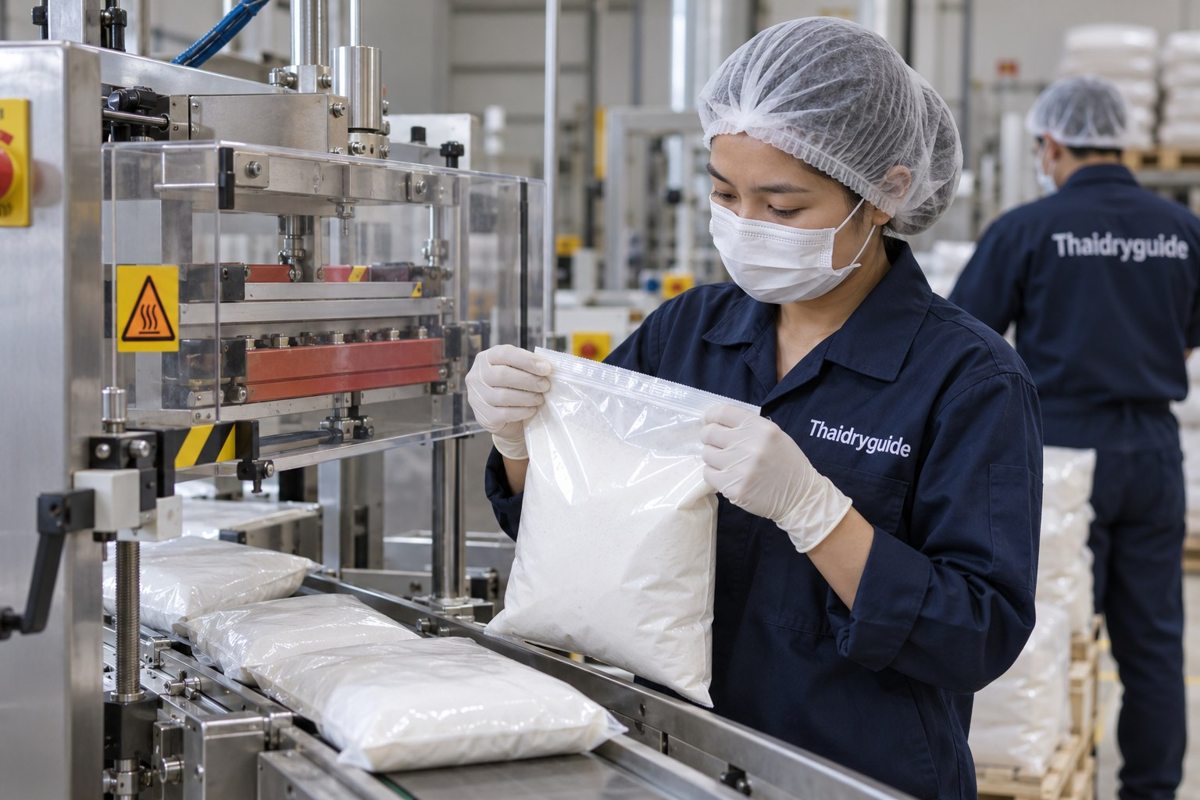
Heat sealing requires temperature, time and pressure matched to the material and equipment; do not copy settings from another type of bag. Check for powder at the mouth, wrinkles, incorrect seal position and burn-through, and keep equipment contact surfaces appropriately clean.
Use seal-strength, leak or integrity tests appropriate to the material and packaging risk. A smooth-looking seal is only an initial visual observation and does not prove that tiny channels are absent. A sewn outer bag also does not usually mean that the liner is sealed.
Reconfirm after startup, material changes and abnormalities
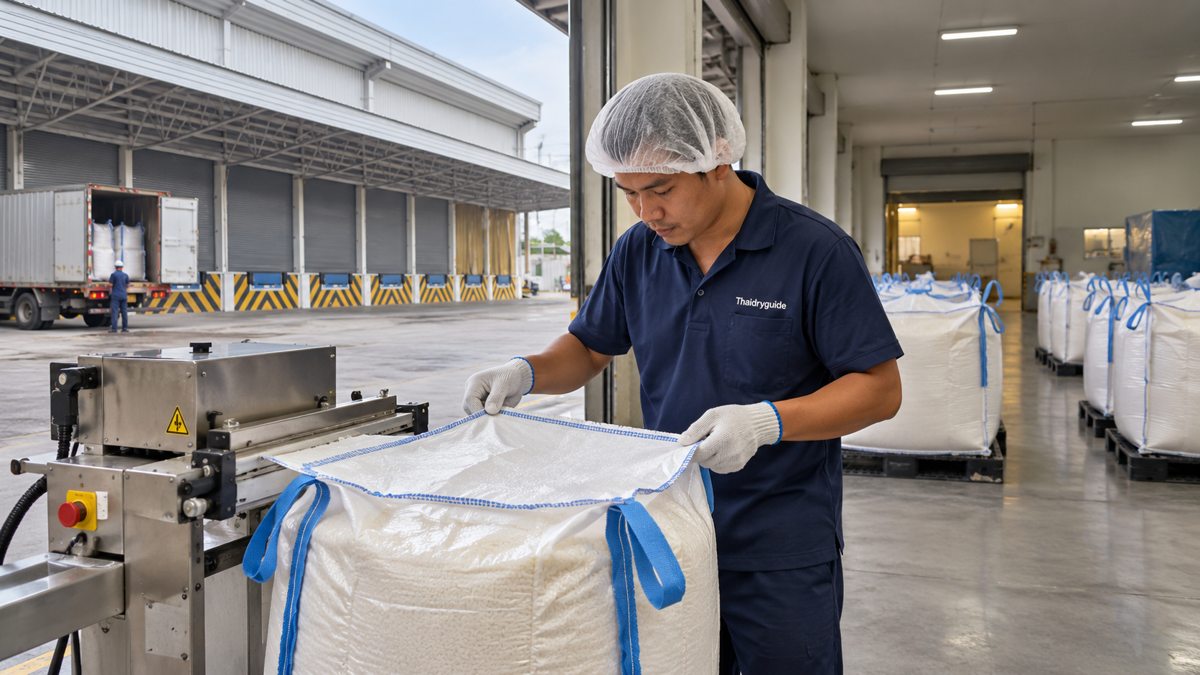
Recheck under factory procedures when production starts, material batches change, equipment is adjusted or seal defects occur. Record settings, actual checks and the non-compliant range, so a continuing batch problem can be traced to its first affected bag.
During rework, assess product exposure, packaging contamination and quality after repacking. Quality personnel should decide whether opening and reworking affects product safety or shelf life. “Resealed” does not automatically mean compliant.
Main reference: the TIS/GDV packaging handbook. Confirm food-contact suitability, sealing parameters and storage life against product and material specifications.