Tribolium castaneum

Identification
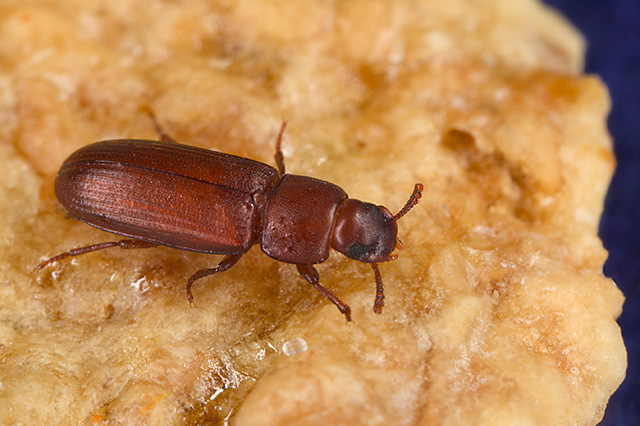
Adults are reddish-brown, elongated and about 3–4 mm, with a three-segment antennal club. Similar flour beetles need careful identification.
Damage and signs
Flour, broken grain and accumulated dust provide habitat. Insects, larvae and secretions contaminate product; heavy infestations may produce a pungent smell.
Where to inspect
Inspect sifters, conveyors, elevator boots, bag seams and equipment dead spaces. Prevent old flour residues entering the next lot during cleaning.
Response
Hold suspect flour, shut equipment down safely and remove residues thoroughly. Check connected equipment and track crawling-insect catches beyond visible floor adults.
Role of humidity control
Dehumidification limits caking and mould risk but does not remove beetles from dry flour.
Representative image, not a final identification. Hold suspect food lots, retain samples and involve quality staff. Qualified specialists should perform fumigation; do not apply household insecticides directly to food.
Temperature, humidity, reduced activity and mortality
Reduced movement, inhibited development and death have different thresholds. Species, life stage, product-core temperature and exposure time matter. RH means relative humidity.
- Cold and activity
- General grain-storage guidance: below 15°C reduces insect activity; below 12°C gives further suppression; below 5°C insects stop feeding. This does not establish mortality of every stage. Published population-growth lower limit: about 22°C. This describes reproduction, not cessation of walking or death.
- Dryness and activity
- Published lower RH reference for population increase: about 1%. Lower RH may restrict multiplication; it is not an inactivity or instant-kill threshold. Measure the package microclimate and product moisture. Red flour beetles are almost unaffected by dryness, so dehumidification cannot control them; removing flour residues is the key.
- Cold-treatment reference
- General household guidance for small packages of dry food: freeze at −18°C (0°F) or colder for at least 4 days. Allow the whole package to become fully cold. Thick bags, pallets and bulk grain require validated core temperatures and exposure times for the relevant stages. Refrigeration at 4°C or 0°C does not guarantee complete mortality.
- Can low RH kill?
- No reliable universal RH value guarantees death of all stages. Eggs, pupae and insects inside products may tolerate dryness. Dehumidification does not replace source removal and validated treatment.
Sources
Canadian Grain Commission, South Dakota State University Extension
Temperature and humidity section: AHDB, Cooling targets for grain storage; FAO stored-product ecology (historical Howe population table); University of Minnesota Extension, Pantry pests.
Red flour beetles found in the warehouse


Field record: small holes in powder packaging and red flour beetles
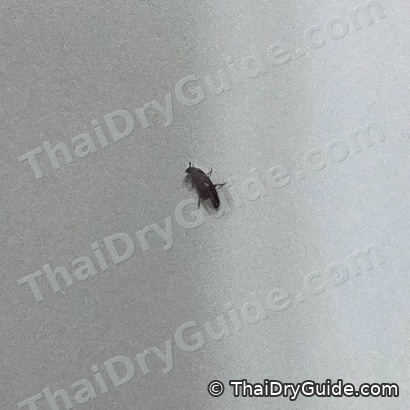
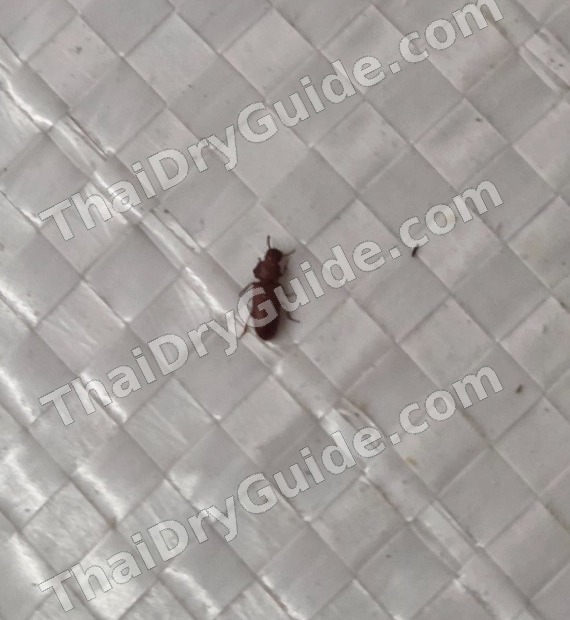
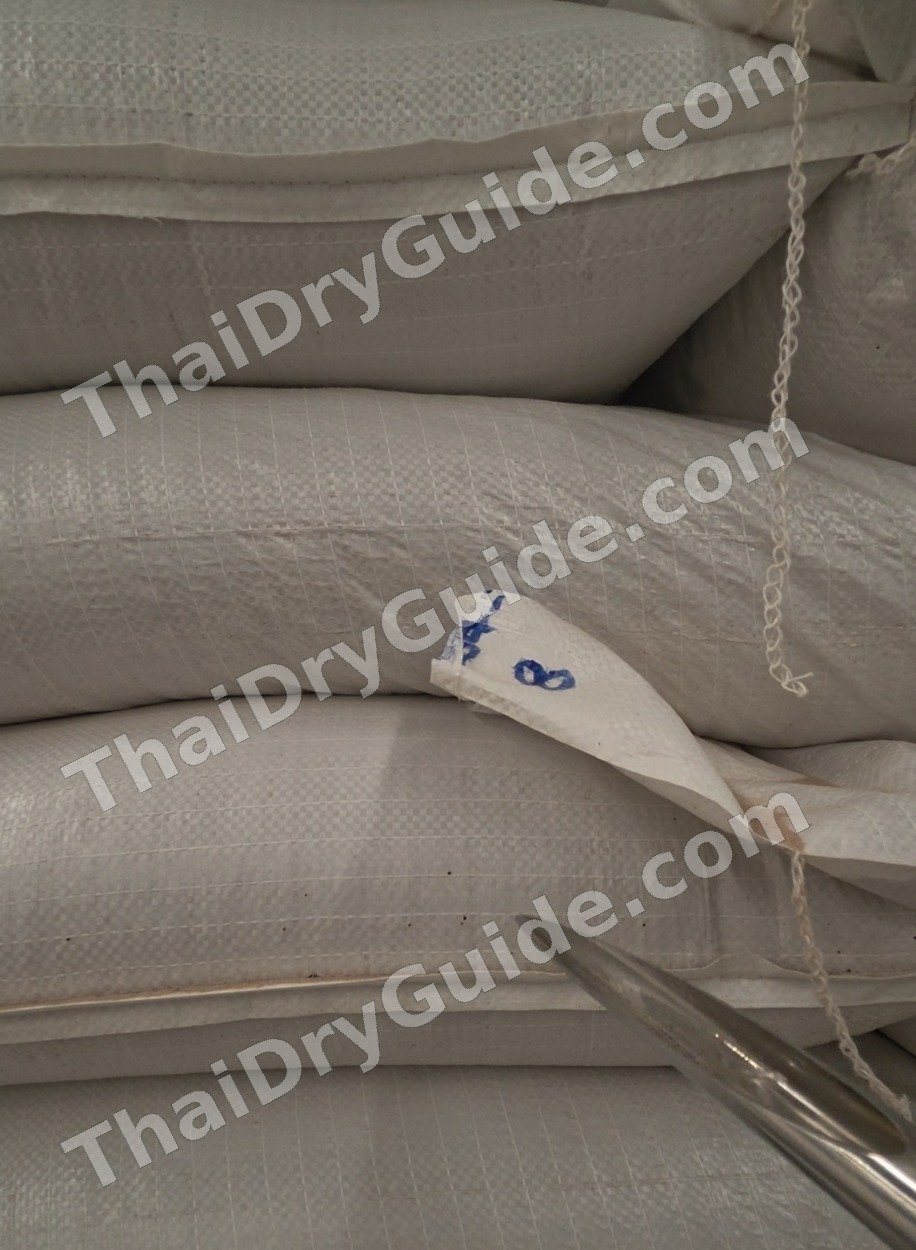
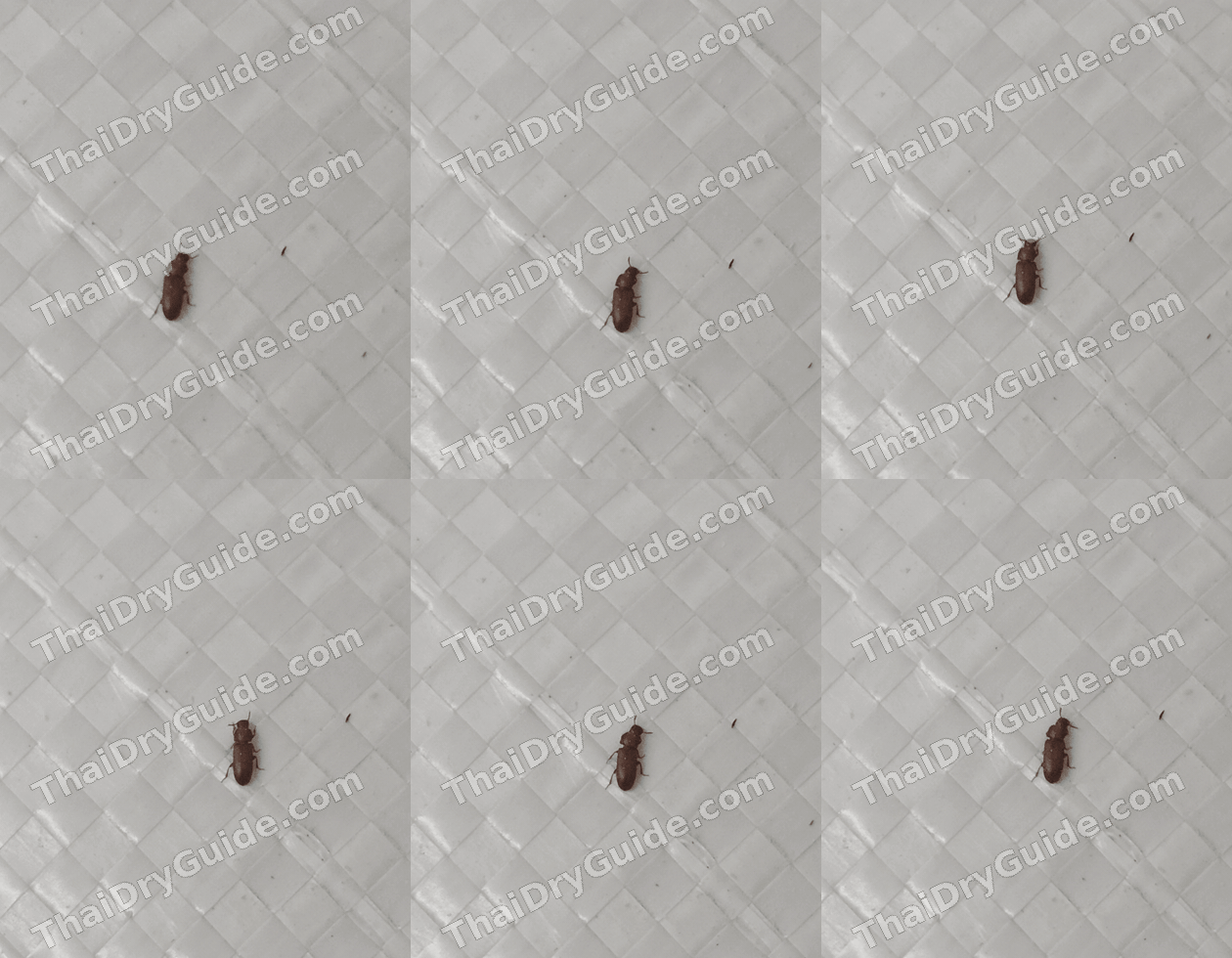
On 23 October 2026, I photographed small holes in powder packaging and a red flour beetle on a bag in the warehouse. During the field observation, the insect moved repeatedly against the packaging and appeared to be trying to bore its way out. The photographs bring together the bag stack, close-ups of holes and the adult beetle.


Animated observation: beetle activity on the packaging
Not sure which insect it is? Use the pest prevention assistant →