Cadra cautella


Identification
Almond moth (Cadra cautella, also known as Ephestia cautella) has gray-brown forewings with faint darker markings. Larvae can infest dried fruit, nuts, grain and seeds. Similar stored-product moths require specimen identification.
Damage and signs
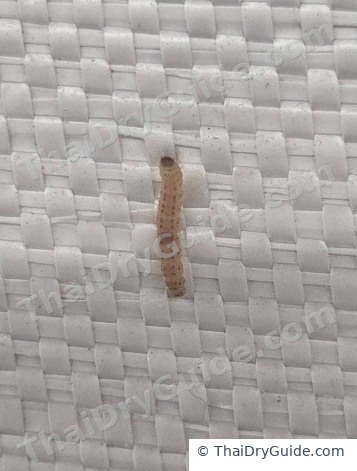
Look for silk, clumps and larvae on product surfaces. Mature larvae may move to walls and ceilings to pupate, away from the breeding material.
Where to inspect
Inspect bag mouths, top layers, wall joints, old bags and retained product in equipment. Record trap locations and catch trends.
Response
Hold suspect lots, locate the source and remove residues and webbing. Use almond-moth-compatible pheromone traps for monitoring; adult catches do not prove larvae are eliminated.
Role of humidity control
Drying limits moisture problems but does not eradicate eggs and larvae in products.
Representative image, not a final identification. Hold suspect food lots, retain samples and involve quality staff. Qualified specialists should perform fumigation; do not apply household insecticides directly to food.
Temperature, humidity, reduced activity and mortality
Reduced movement, inhibited development and death have different thresholds. Species, life stage, product-core temperature and exposure time matter. RH means relative humidity.
- Cold and activity
- General grain-storage guidance: below 15°C reduces insect activity; below 12°C gives further suppression; below 5°C insects stop feeding. This does not establish mortality of every stage. Published population-growth lower limit: about 17°C. This describes reproduction, not cessation of walking or death.
- Dryness and activity
- Published lower RH reference for population increase: about 25%. Lower RH may restrict multiplication; it is not an inactivity or instant-kill threshold. Measure the package microclimate and product moisture.
- Cold-treatment reference
- General household guidance for small packages of dry food: freeze at −18°C (0°F) or colder for at least 4 days. Allow the whole package to become fully cold. Thick bags, pallets and bulk grain require validated core temperatures and exposure times for the relevant stages. Refrigeration at 4°C or 0°C does not guarantee complete mortality.
- Can low RH kill?
- No reliable universal RH value guarantees death of all stages. Eggs, pupae and insects inside products may tolerate dryness. Dehumidification does not replace source removal and validated treatment.
Sources
Canadian Grain Commission, NC State Extension
Temperature and humidity section: AHDB, Cooling targets for grain storage; FAO stored-product ecology (historical Howe population table); University of Minnesota Extension, Pantry pests.
Moths actually found in the warehouse
These nine photographs document moths actually found in the warehouse.
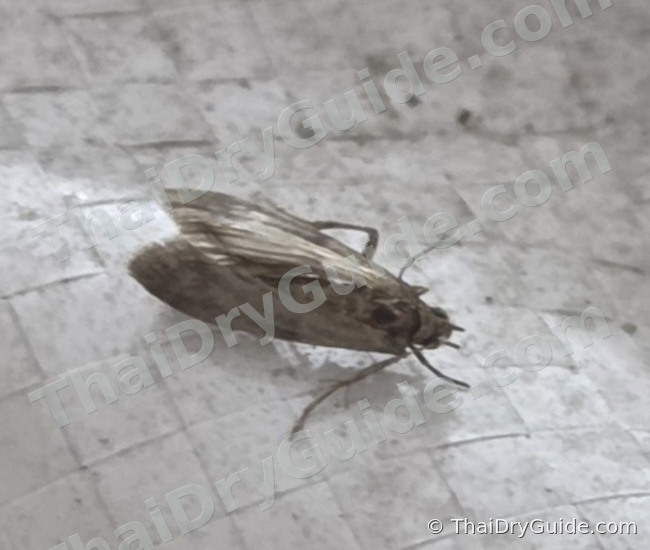
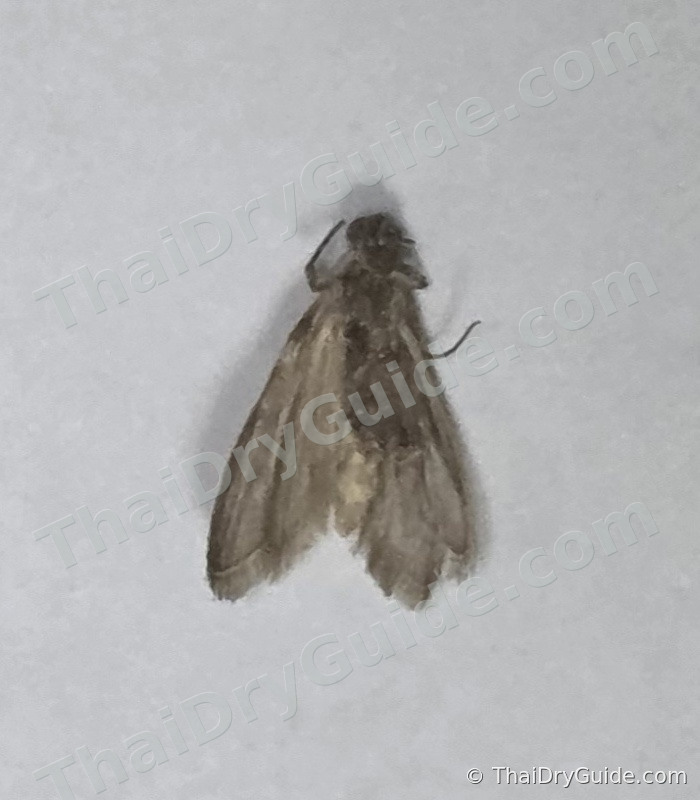
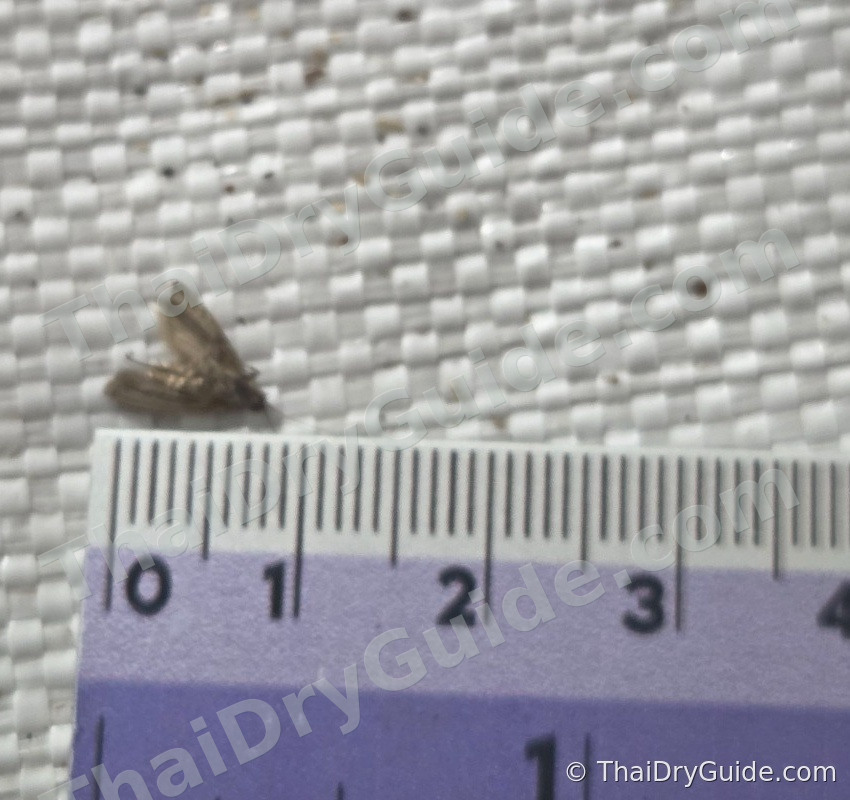
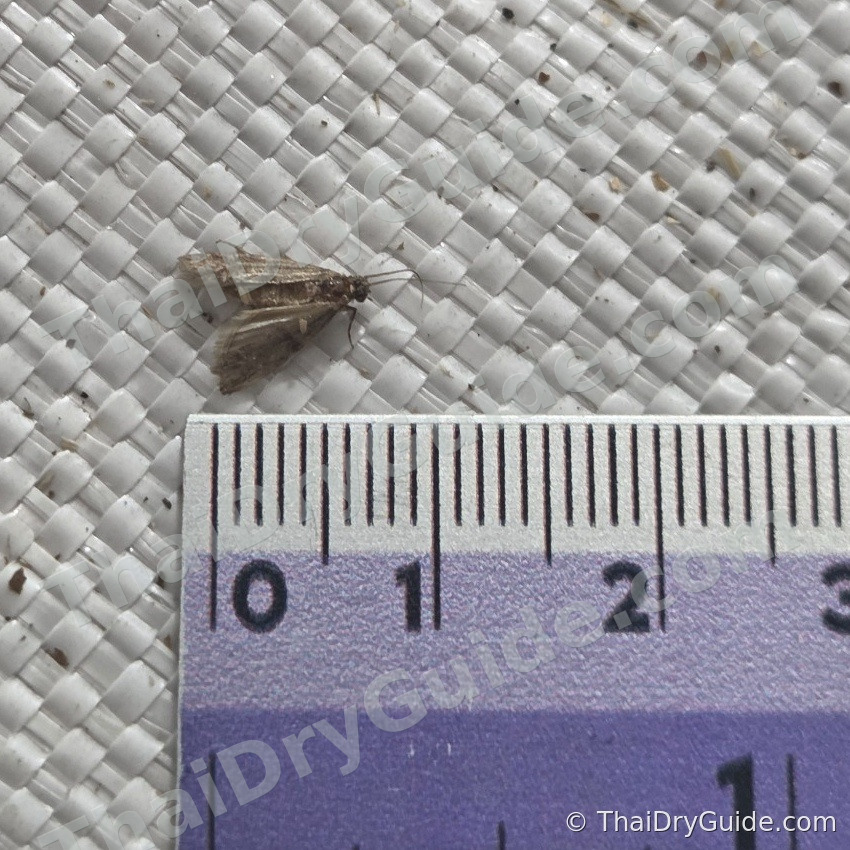
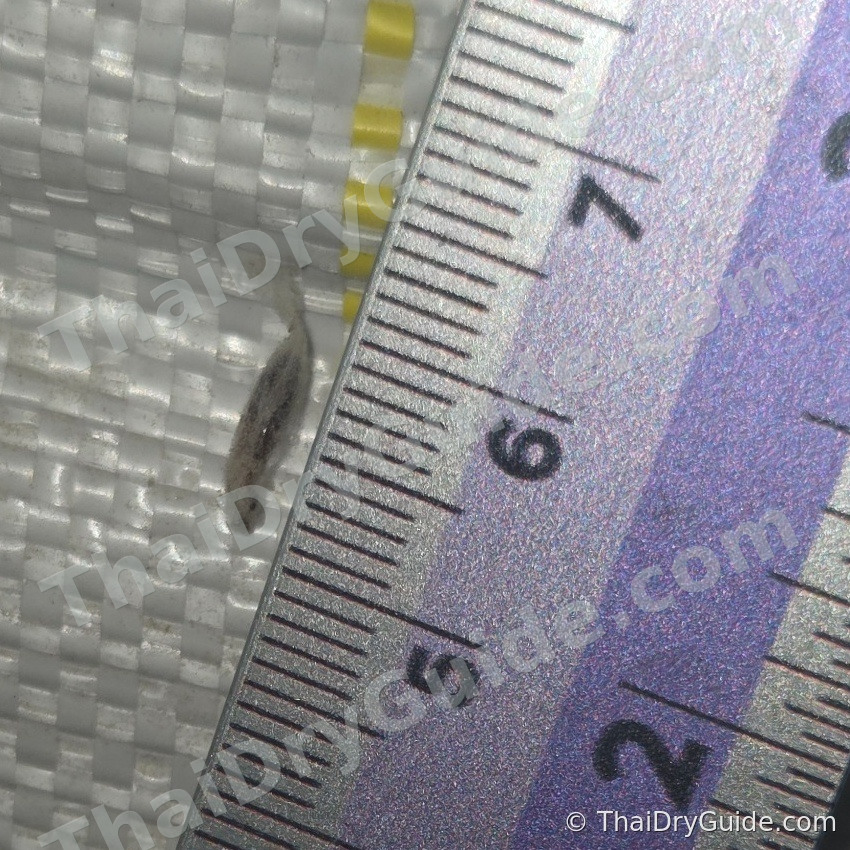
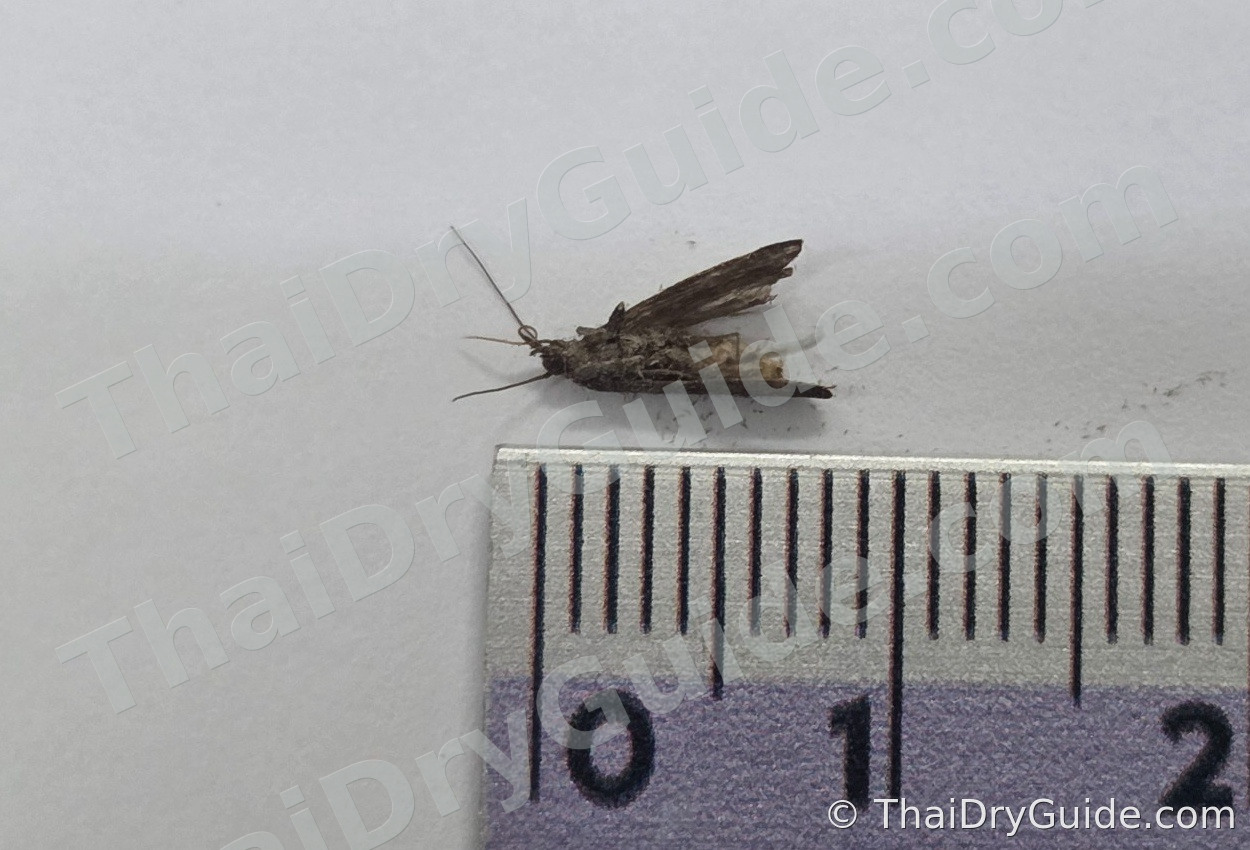
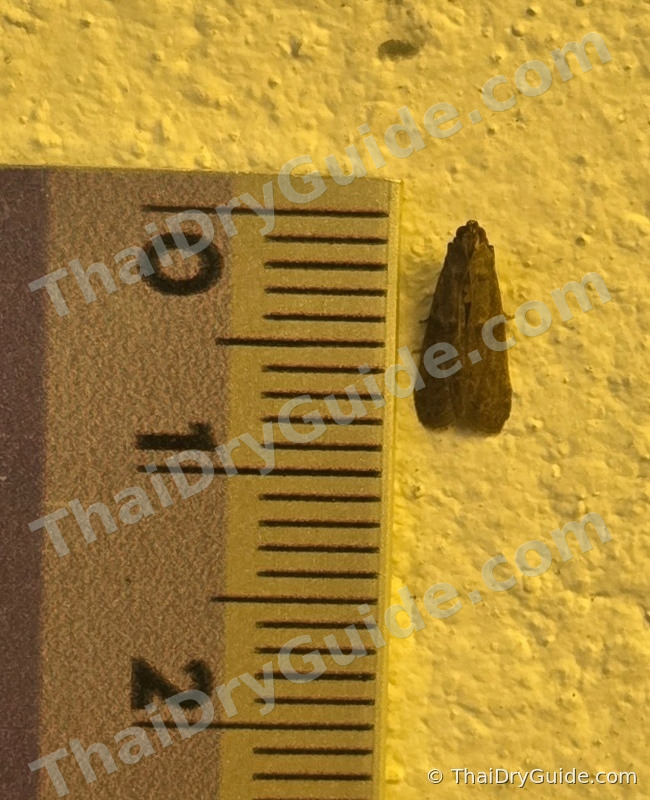
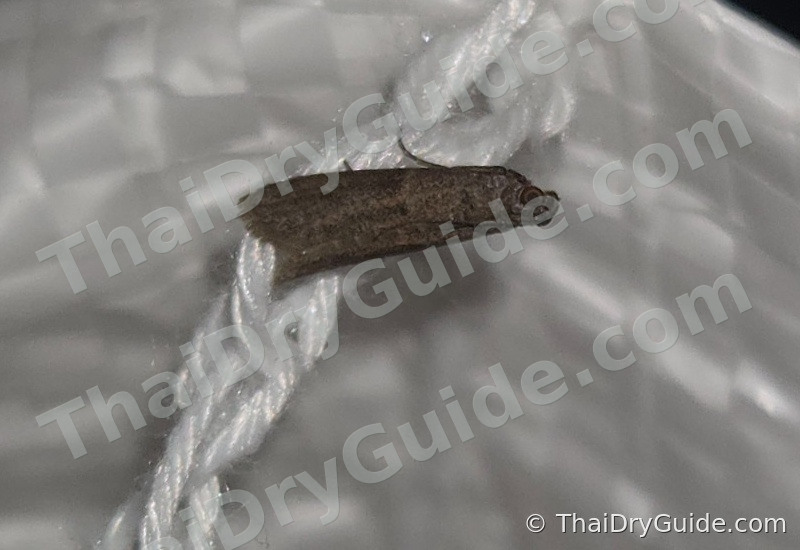
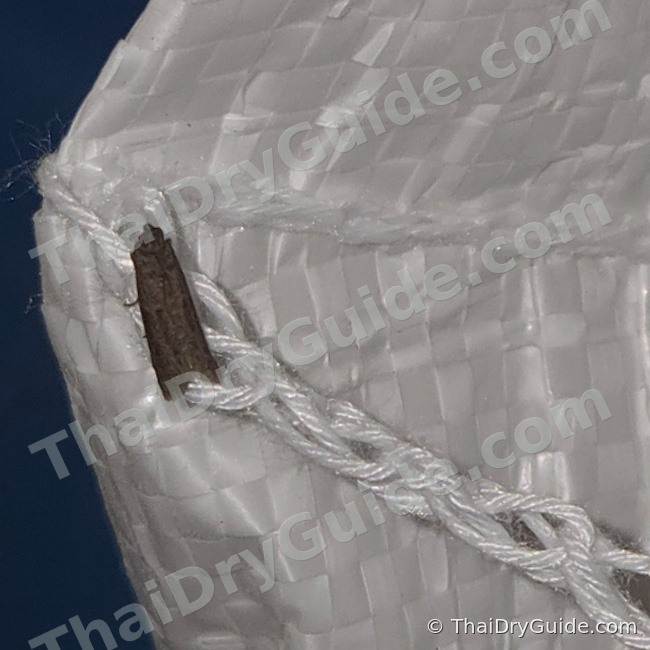
Click a photograph to view the larger image
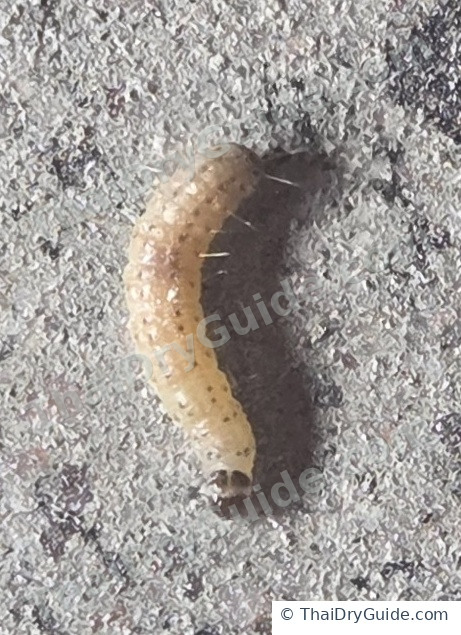
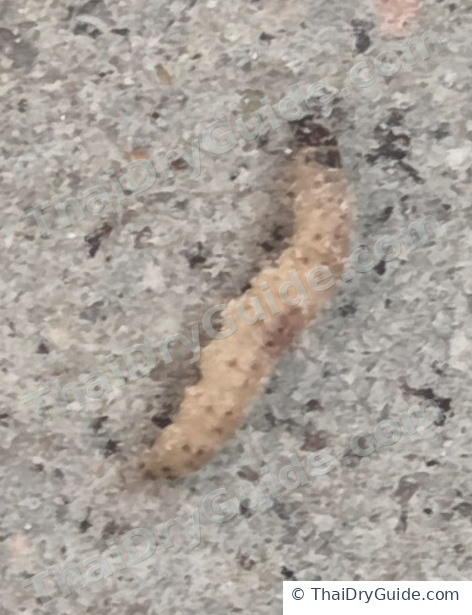
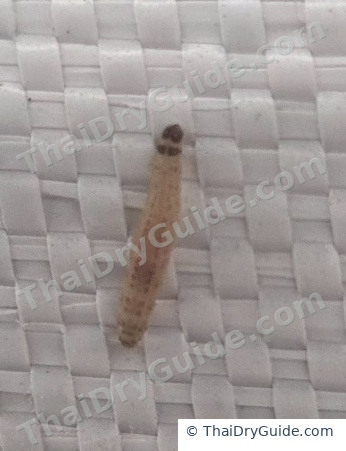
Moth larvae found in the warehouse
Not sure which insect it is? Use the pest prevention assistant →