Once cargo enters a container, a relatively independent microclimate develops inside. External weather, cargo and packaging, and container type are the three main influences. Understanding their interaction helps assess moisture damage and condensation risks during transport.
1. External climate: how sunshine and cooling affect container temperature

Route, season, day and night, and weather all influence container climate. The same cargo on different routes or in different seasons may experience markedly different temperature changes. Experience from one shipment cannot simply be applied to another.
Steel walls and roofs transfer heat relatively quickly. Under sunshine, the roof and air beneath it can heat up easily; wind, outdoor temperature and rain alter heat dissipation. When rain contacts the roof, it may cool faster than some walls and the cargo.
Air temperatures inside containers often fluctuate more than cargo temperatures. In one set of observations, outside air was approximately 25℃ while air in a brown container rose to about 50℃ and in a white container to about 38℃. This difference shows that solar radiation and container surface properties influence heating. Container temperature does not always equal outdoor air temperature.
2. Humidity and dew point: when water condenses from air
Absolute humidity is the mass of water vapor in a given air volume, usually expressed in g/m³. Relative humidity indicates how close the vapor is to saturation at the current temperature, usually as a percentage. Relative humidity must be understood together with temperature.
When water-vapor content and pressure remain substantially unchanged, rising temperature reduces relative humidity and falling temperature increases it. Outside air entering a hotter container may show a lower RH after warming, but warming alone does not remove the moisture.
Dew point is the temperature at which air reaches saturation as it cools. If a container wall, roof or cargo surface is below the dew point of the air touching it, water vapor may condense on that surface. Warm, humid air contacting a colder surface is a typical condition for condensation.
For example, take a drink bottle with a surface temperature near 7℃ from a refrigerator and place it in air at 20℃ and 70% RH. The air’s dew point is approximately 14℃. Since the bottle is below it, droplets soon appear outside. The water comes from surrounding air, not from inside the bottle.
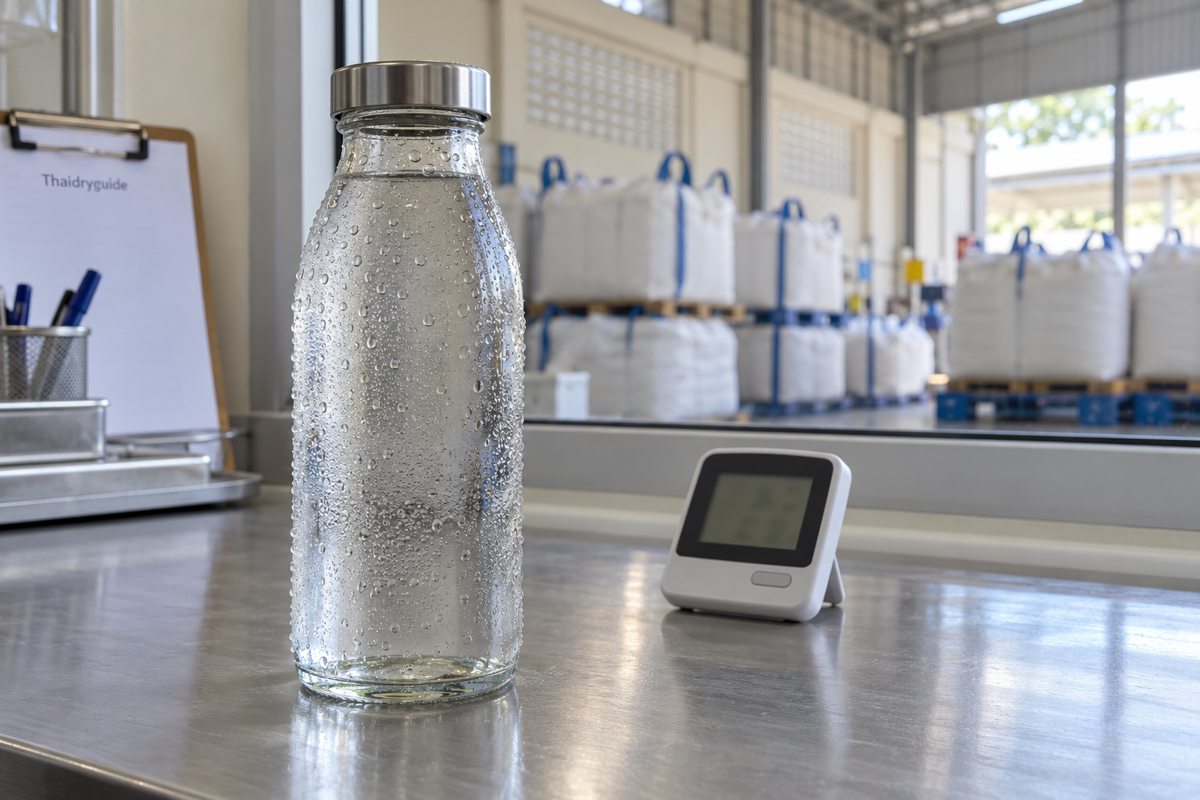
The closer air temperature is to dew point, the less cooling is required to reach saturation. To check whether a particular location may condense, compare its surface temperature with nearby air’s dew point rather than using only average air temperature inside the container.
3. Cargo and packaging: important sources of water vapor
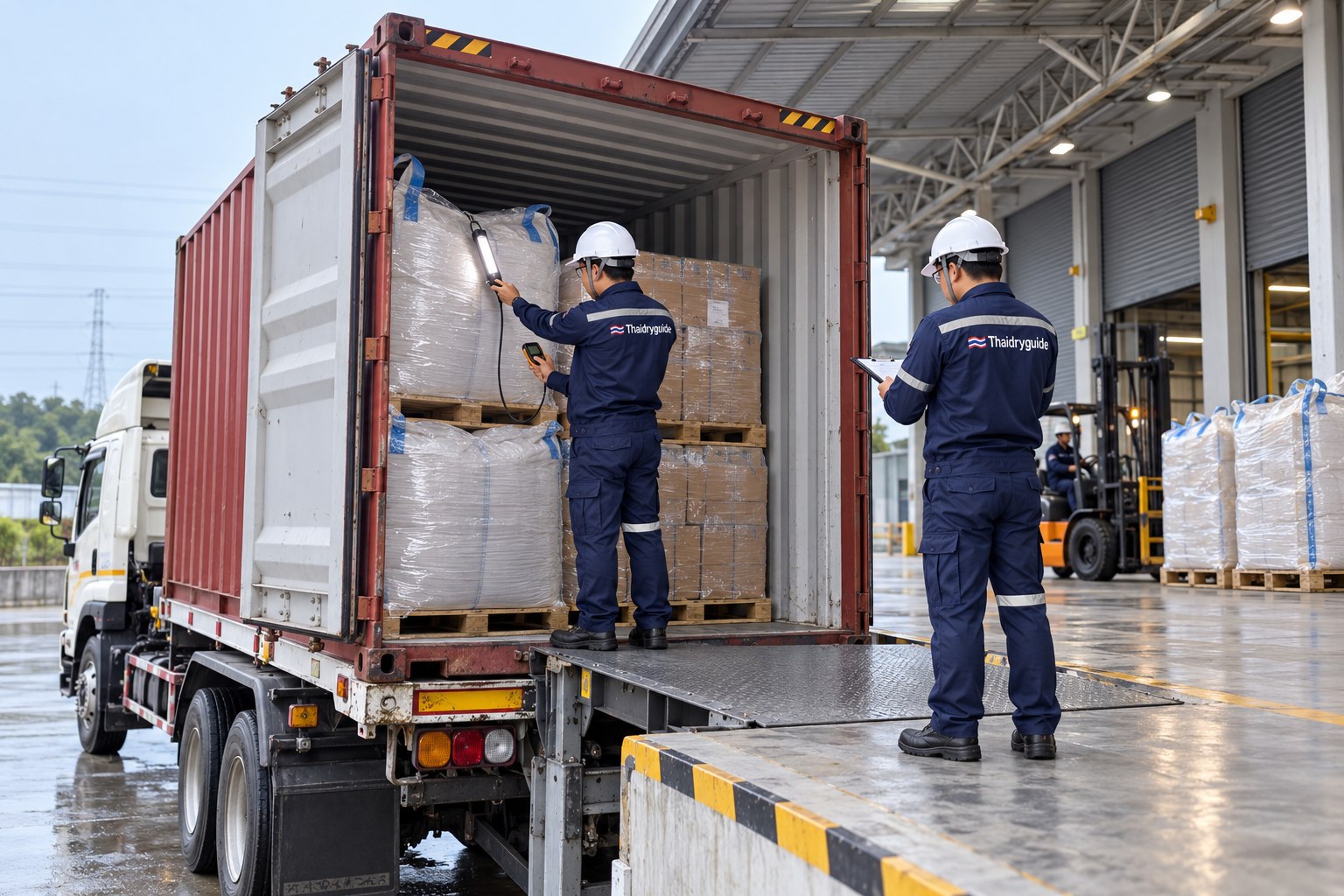
Container humidity is not determined solely by the air present during loading. Moisture content and hygroscopic properties of cargo, packaging, wooden floors, dunnage and securing materials can all influence subsequent vapor balance. Loading in rain or using a damaged container may also introduce additional water.
Hygroscopic cargo exchanges water vapor with surrounding air, gradually approaching equilibrium moisture content for those conditions. The amount of cargo involved and its exposed surface area also affect the container environment. Packaging that looks dry is not necessarily moisture-free.
As temperature rises and air RH falls, some cargo or materials release vapor. Later cooling may cause that vapor to condense on colder steel. Controlling cargo and auxiliary-material moisture before transport is therefore an important step in reducing condensation risk.
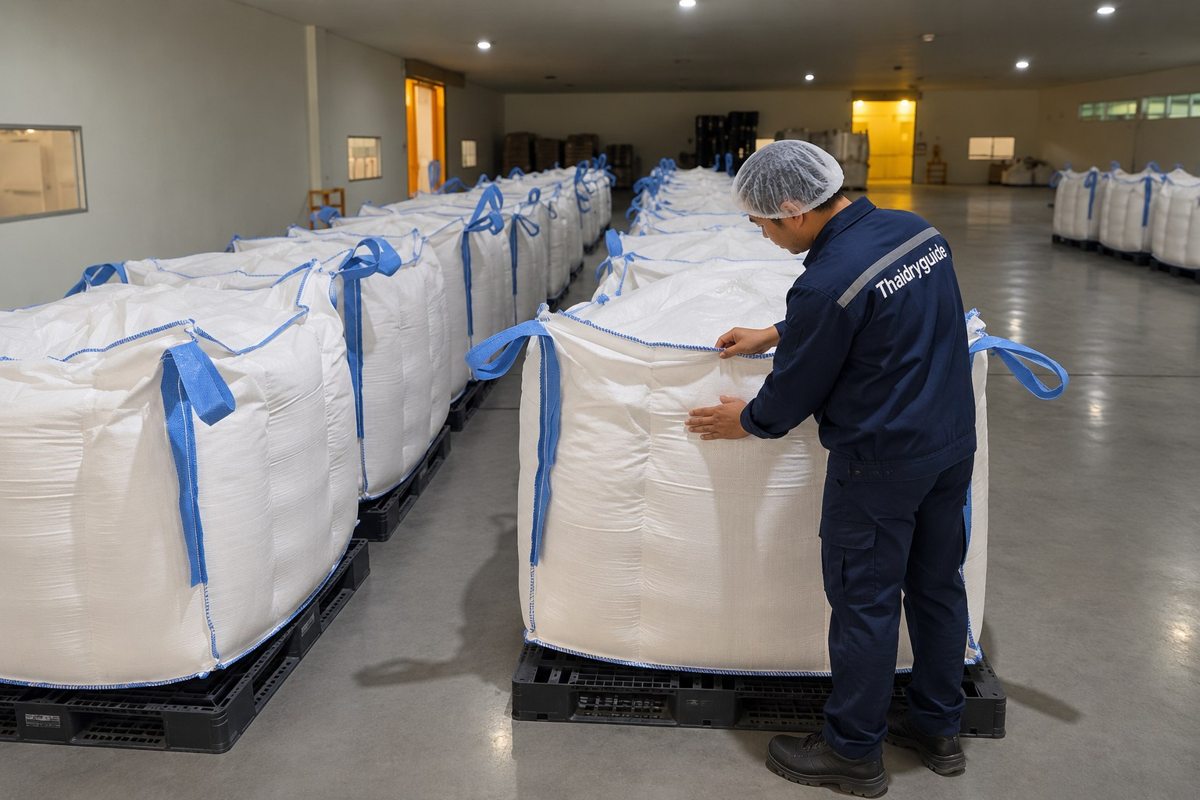
For bulk bags and palletized packs, consider cargo, packaging and container floor as one system. Maintain dryness meeting product requirements before loading and avoid bringing rain-wet packaging or materials into the container.
4. Container rain: why droplets fall from the roof
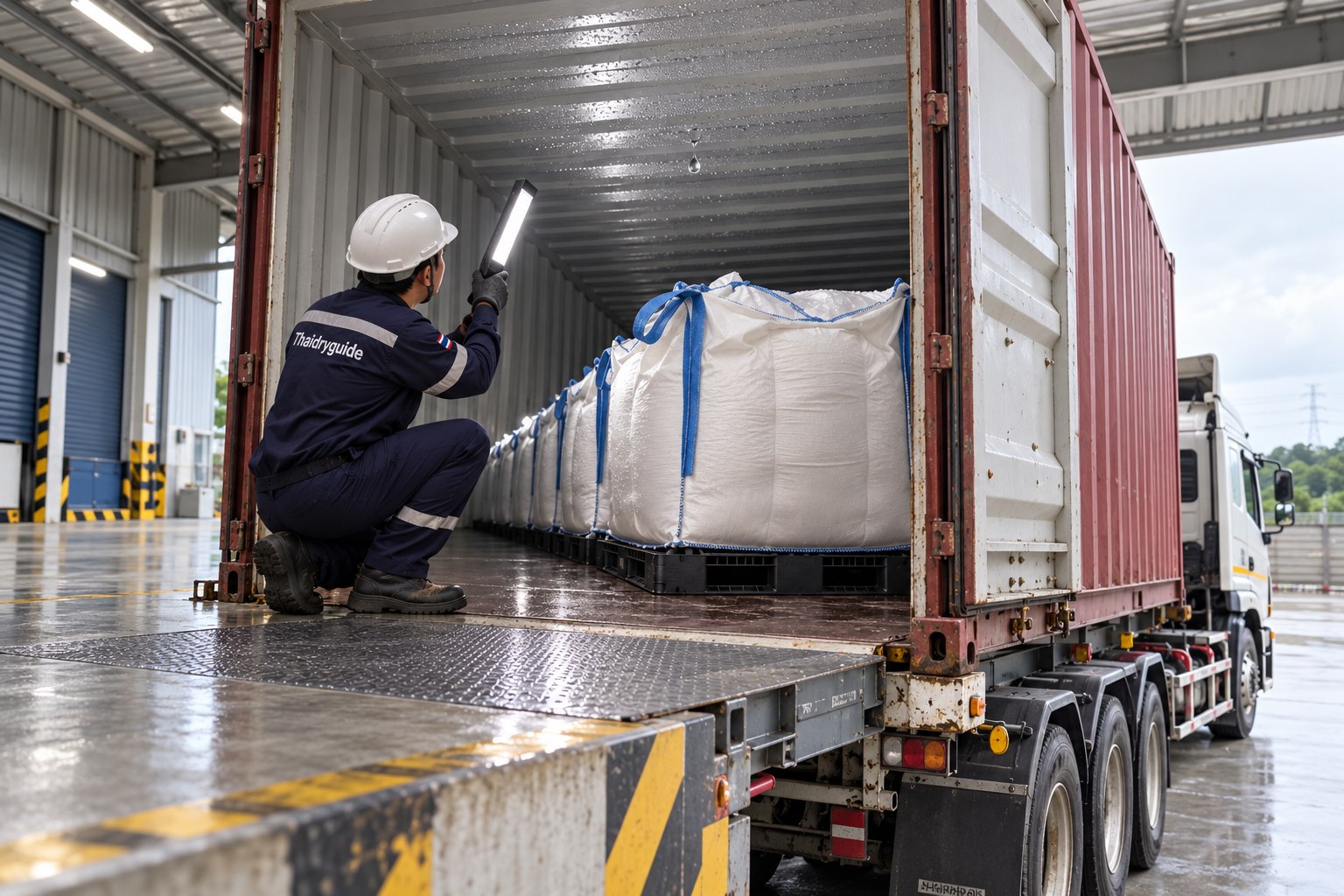
Daytime heating and nighttime cooling can repeatedly exchange heat and moisture between cargo, air and steel. Vapor released by cargo may condense when it encounters a cooler roof or wall.
When roof droplets accumulate sufficiently, they fall onto cargo below, producing what is commonly called “container rain.” This does not require a leak hole in the roof; existing moisture inside can also cause dripping.
Some condensation on walls may evaporate as temperatures rise again, but airflow beneath the roof differs and droplets may not dry at the same time. Repeated condensation can gradually accumulate water and increase dripping damage to upper cargo layers.
More moisture carried by cargo generally means a greater potential vapor load. Prepare shipments according to applicable cargo moisture-content requirements rather than focusing only on one RH reading before closing the doors.
5. Container types: what ventilation and insulation change
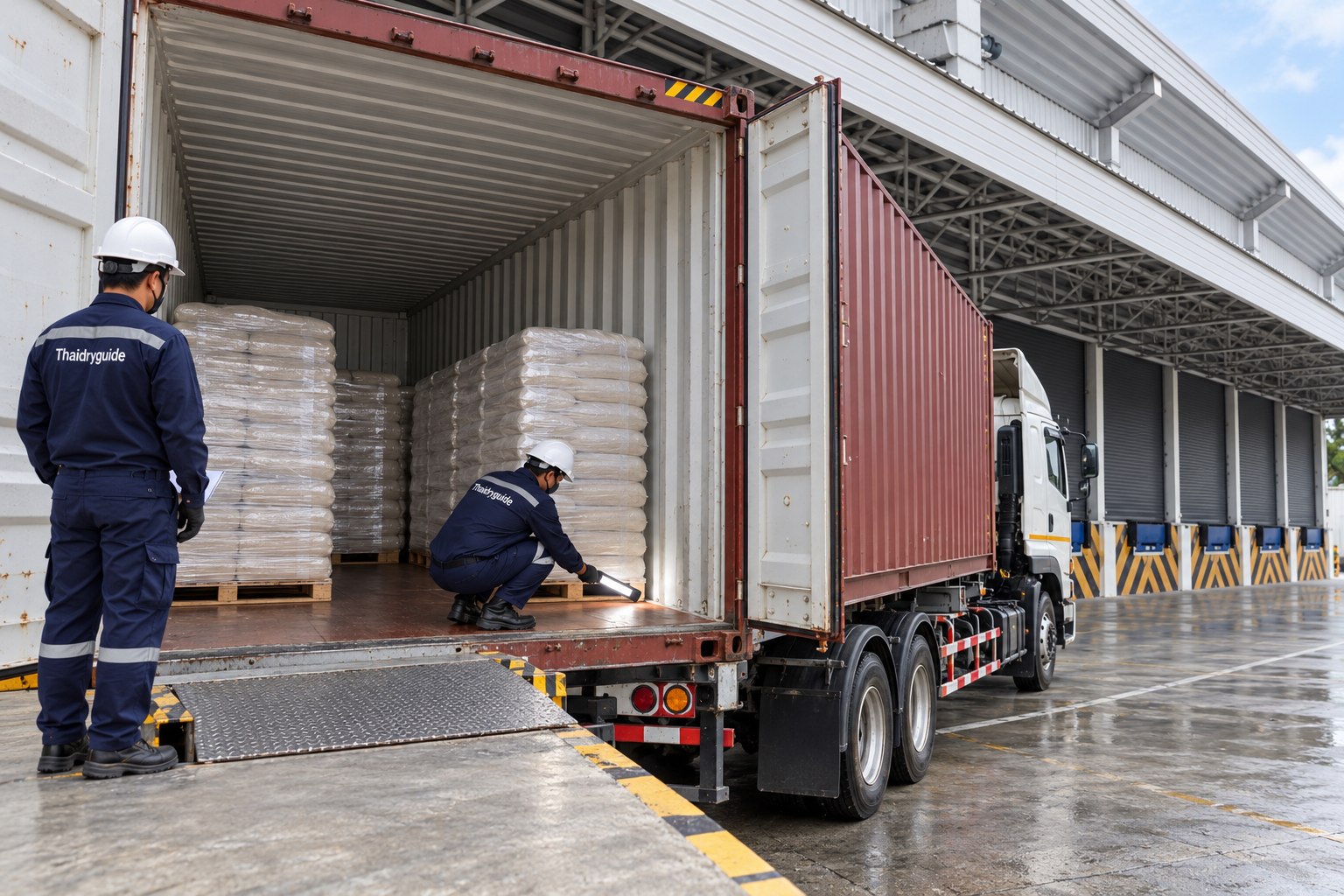
Ordinary enclosed dry containers, ventilated containers, insulated containers, reefers and open transport units have different heat- and air-exchange conditions. Ordinary dry containers should not be regarded as absolutely vapor-tight either; worn doors or other defects may influence their internal environment.
For suitable cargo and transport conditions, ventilated containers remove heat and vapor released by cargo through air exchange. Ventilation effectiveness depends on conditions inside and outside. One ventilation approach cannot apply to all cargo.
A reefer with refrigeration switched off still provides some insulation, slowing changes from sunshine and nighttime cooling. However, insulation also delays temperature equilibration with the outside: cold cargo arriving in a hot, humid region may remain below the local dew point and develop condensation. Insulation does not permanently maintain a suitable environment.
Open transport units are closer to outdoor climate and offer less weather protection. Closing them with a tarpaulin may create a local microclimate. Container selection must therefore consider external climate, cargo characteristics and temperature and humidity changes throughout transport.
Main references: TIS container climate, commodity information and the GDV packaging handbook. Thai site-inspection examples are compiled by this site.