Inspect the paths used by people, vehicles, raw materials and incoming air.
Scope: Examples concern industrial businesses in eastern Thailand, including Chonburi, Rayong and Chachoengsao. Apply this guidance according to site conditions and product requirements.
Start with daily goods movements

Estimate vehicle movements and door-opening periods, and inspect canopies, loading platforms and drainage outside doors. A large canopy does not block rain from every wind direction. Whether the transfer point remains exposed after a truck parks depends on the actual operating position.
Receiving, temporary storage and removing wet outer packaging require space. If a candidate factory’s unloading entrance connects directly to the dry packaging area, assess whether a buffer can be added; otherwise wet pallets and rainwater will enter with goods movements.
Consider door/window seals together with necessary ventilation
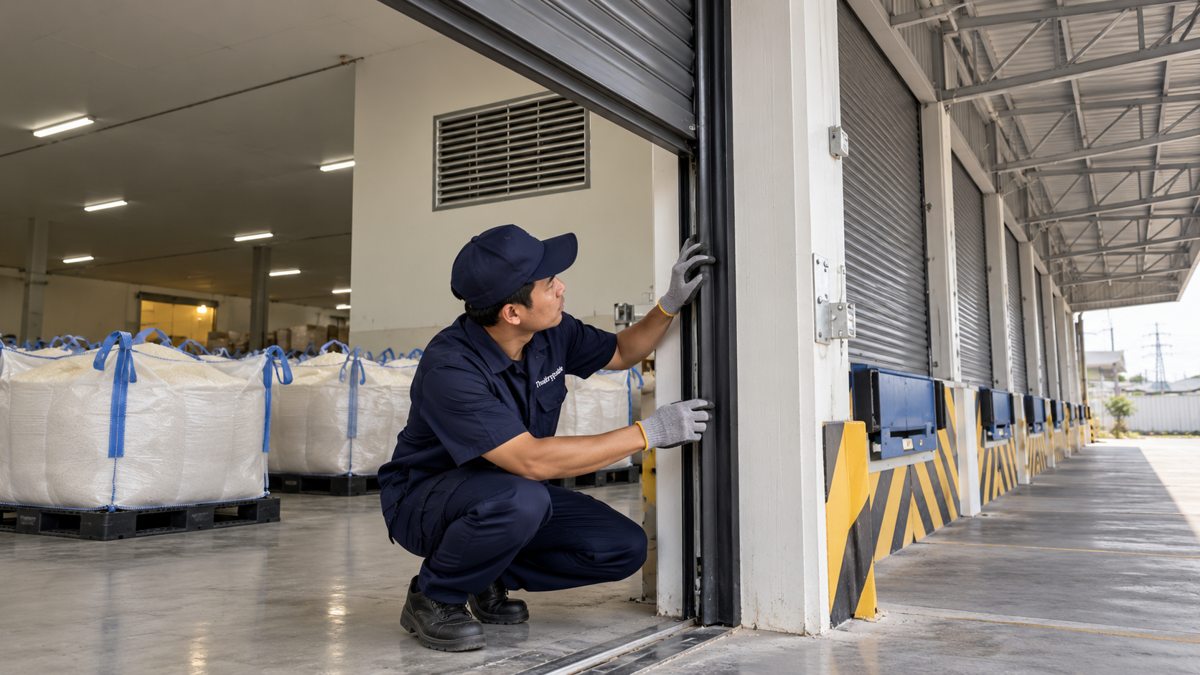
Inspect damaged door seals, window gaps, roof ventilation openings and wall penetrations. In rooms planned for humidity control, doors left wide open increase the moisture load. Decide whether rapid doors, batch handling or enclosed zones are suitable while considering forklift access, workers and fire protection passageways.
If dust, heat or process exhaust is involved, do not seal every air opening. Establish necessary exhaust and replacement-air conditions before assessing dehumidification. Equipment selection requires knowing where replacement air comes from and its volume.
Map the routes by which humid air and materials enter
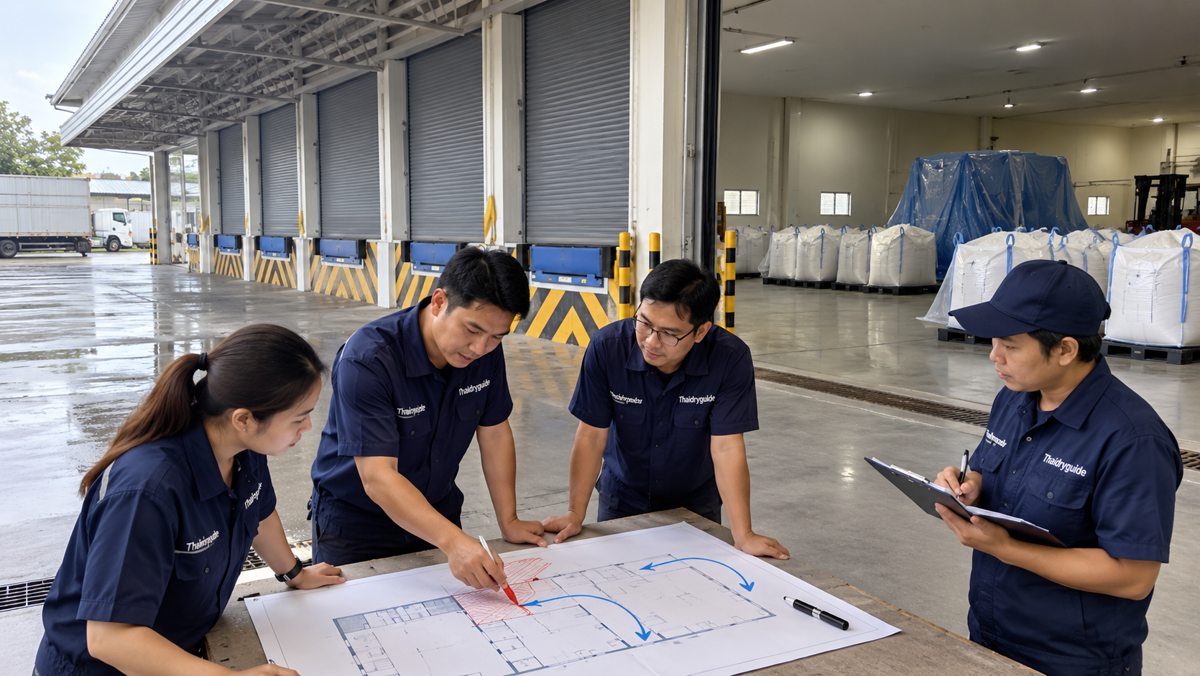
On a floor plan, mark doors, exhaust, replacement-air supplies, temporary damp-raw-material storage and washing areas. Separating high-moisture-load paths from moisture-sensitive packaging and finished-goods areas can reduce the subsequent equipment load.
When comparing indoor and outdoor air, do not use RH percentages alone. Compare dew points or humidity ratios with temperature considered. A single instantaneous site reading can support an initial screen, but zoning and dehumidification sizing also require records from representative weather and production shifts.
This article provides factory-site inspection guidance. Humidity and condensation principles follow TIS; confirm drainage, structure and lease matters through site-specific professional information.