Look for signs of water ingress or condensation along structural joints, low points and past repair locations.
Scope: Examples concern industrial businesses in eastern Thailand, including Chonburi, Rayong and Chachoengsao. Apply this guidance according to site conditions and product requirements.
Check roof joints and the leak history
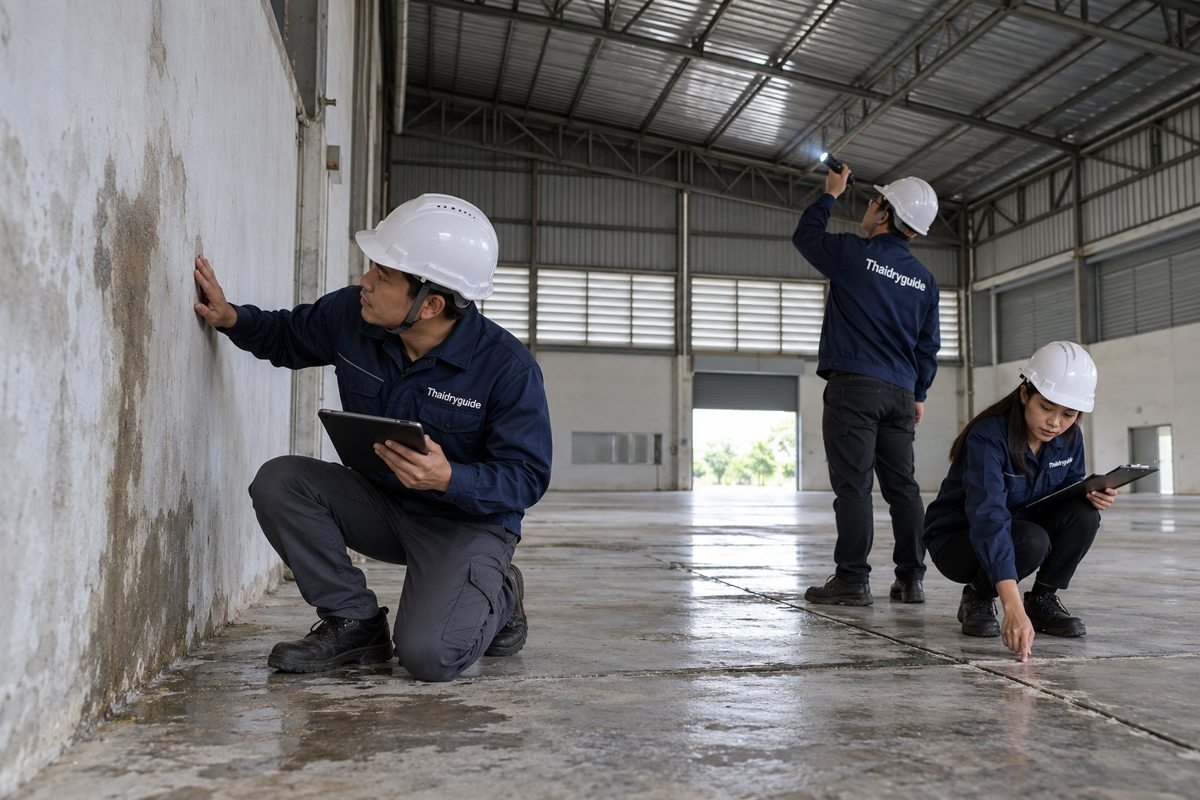
From a safe position on the ground, inspect roof-panel joints, skylights, roof pipe penetrations and roof-to-wall junctions for water marks and temporary collection arrangements. New coatings or freshly painted walls only show that work has been done; appearance alone cannot establish that a leak is resolved.
Request the locations, causes, photographs and post-rain inspection results of recent repairs. Close-up roof inspections should be performed by personnel with appropriate competence and safety measures; do not send ordinary employees onto slippery roofs to locate leaks.
Investigate the source of damp floor marks
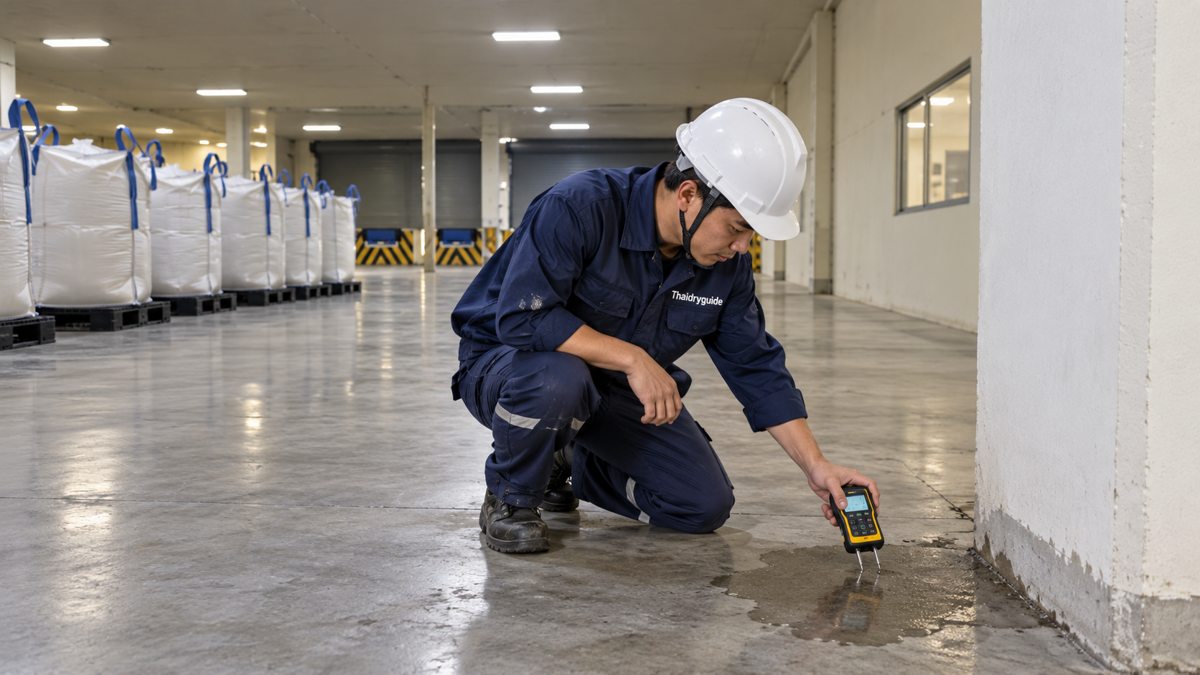
Mark cracks, damp wall bases, floor-level differences and locations of previous standing water. Ask about floor construction and moisture-barrier details. Water may come from rain, washing, pipes, groundwater or vapor migration through the slab; damp marks do not automatically mean “the air is too humid”.
A floor moisture meter must suit the tested material. Wood-mode readings cannot be treated directly as concrete moisture content, and a dry surface does not prove the underlying material is dry. For floor repairs, coatings or structural issues, use the appropriate testing and engineering method.
Condensation and waterproofing are separate issues
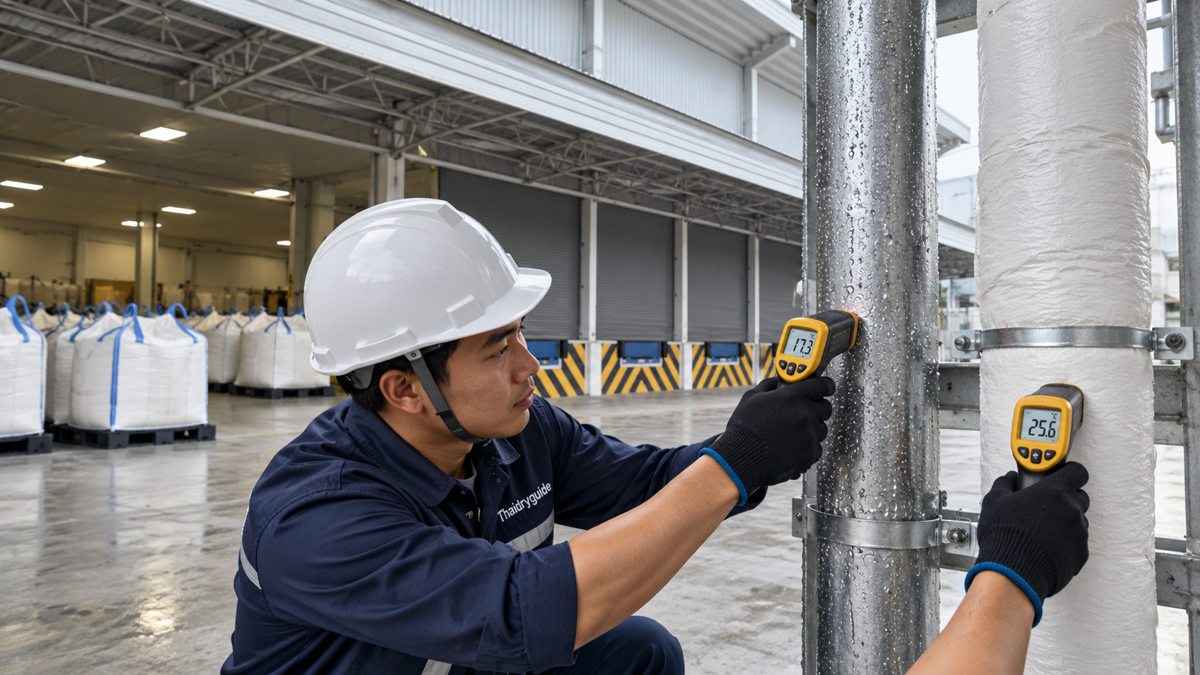
If future operations include air-conditioned cold zones, cold pipes or hot/cold boundaries, inspect insulation and vapor barriers. Condensation may occur when the air’s dew point exceeds surface temperature; waterproof coatings do not automatically prevent it on cold surfaces. Ordinary air temperature during a viewing is also not the surface temperature of future equipment.
Specify post-repair verification: revisit roofing after representative rainfall, test floors according to material and construction requirements, and measure and observe cold surfaces under representative operating conditions. Turn “it has been repaired” into “it has been verified under conditions of use”.
This article provides factory-site inspection guidance. Humidity and condensation principles follow TIS; confirm drainage, structure and lease matters through site-specific professional information.