In late October 2026 we found small dark-brown beetles on the walls and floor of a bean-ingredient warehouse in eastern Thailand — a few at a time, sometimes more than a dozen, climbing the white walls at dusk. After photographing and measuring them and checking the literature, we identified them as the lesser mealworm (darkling beetle, Alphitobius diaperinus, called ด้วงขี้ไก่ in Thai). It is one of the most common beetles in Thai feed mills, food-ingredient warehouses and poultry houses. This article uses our own site photos to show how to recognise it, what problems it causes and how to control it.
How to recognise the lesser mealworm
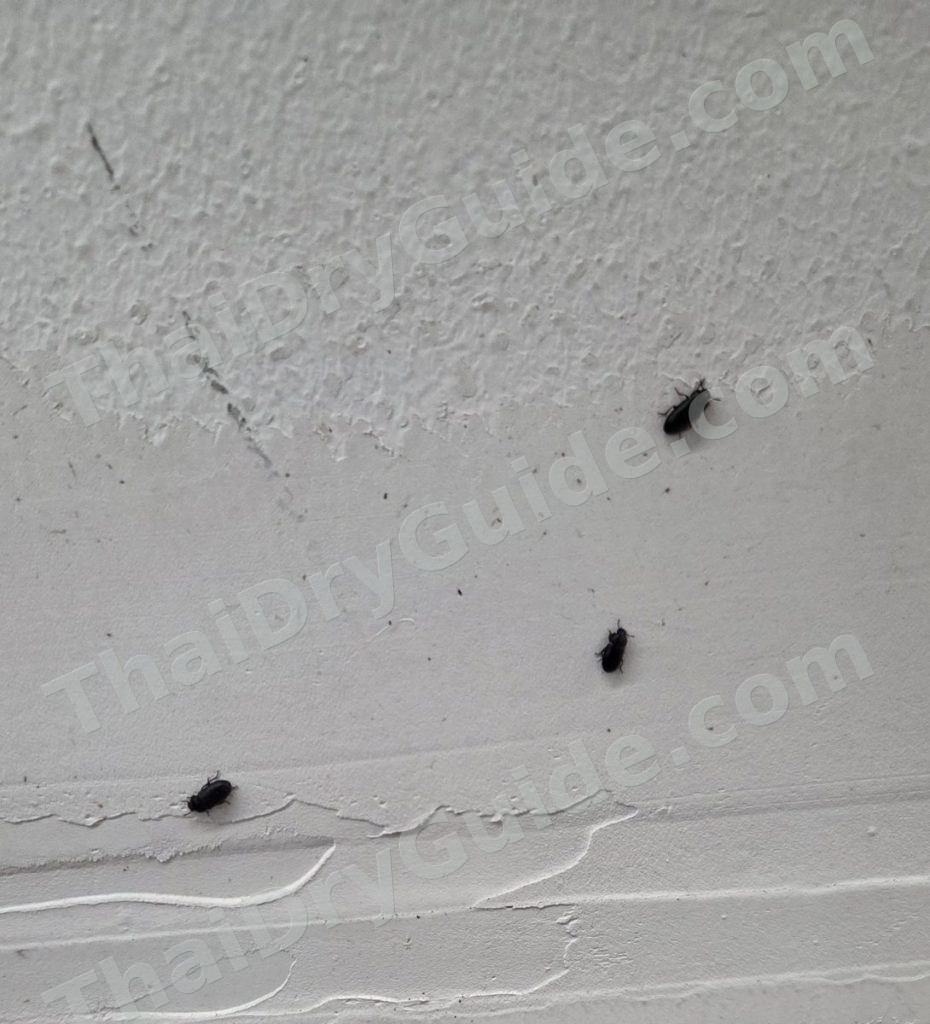

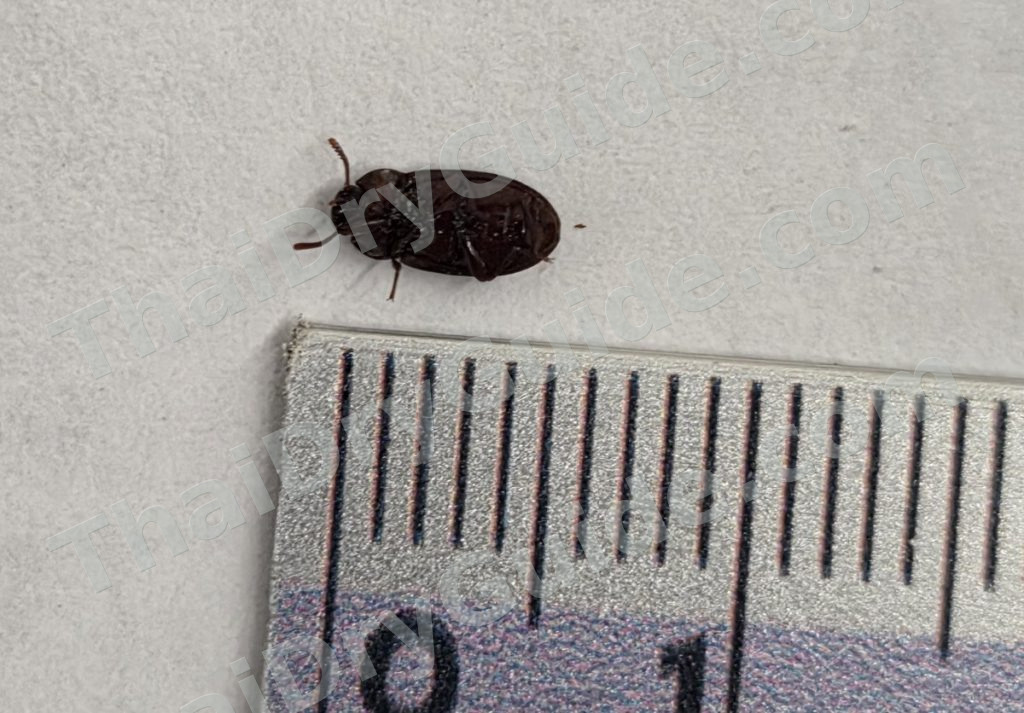
| Feature | Lesser mealworm |
|---|---|
| Adult length | About 5.5–7 mm |
| Colour | Black to dark reddish-brown; young adults are redder, older ones darker |
| Shape | Broad oval, slightly flattened, shiny |
| Larva | Yellow-brown, cylindrical, shiny, about 1–1.5 cm when mature — like a small mealworm |
| Habits | Hides under stacks, pallets and in cracks by day; active at dusk and night; climbs walls, can fly, attracted to light |
Look-alikes: the red flour beetle is smaller (about 3–4 mm), reddish-brown, flatter and narrower; bean weevils are primary pests that develop inside whole beans and are short and stout, often with patterned backs. If in doubt, put a few live beetles and larvae in a small jar and ask your pest-control company to identify them.
Why it appears in warehouses
The lesser mealworm is a secondary pest. It does little damage to sound, dry beans and grain; it prefers damp, mouldy or broken material, dust and spilled product. Finding it usually means there is spillage, dust or moisture somewhere in the building.
- Thailand is warm and humid all year, so it breeds all year round.
- A female typically lays 200–400 eggs; eggs hatch in about a week, larvae take 40–100 days to mature, and adults can live about a year.
- Mature larvae leave the stack to pupate in hidden places: wall cracks, wooden pallets, foam insulation panels and packaging.
Risks for food and feed plants
- Foreign-matter contamination. Adults, larvae, cast skins and droppings in raw material or finished goods mean complaints, returns, or export containers held and fumigated at the destination — usually costing far more than the product the insects eat.
- Pathogens. The beetle is a known carrier of Salmonella, E. coli, Campylobacter and other bacteria, and moves them between raw material, floors and equipment.
- Moisture and mould. Heavy infestations raise local temperature and humidity, speeding up mould growth and mycotoxin risk.
- Damage to buildings and packaging. Larvae chew into wood, foam sandwich panels and insulation, and can chew through woven bags into jumbo bags.
- Audit findings. Live insects in a warehouse or production area are a major non-conformity in GMP, HACCP, BRC and customer audits.
Can it get into jumbo bags?
Yes. Stitching holes, filling and discharge spouts and tie points all leave gaps, and larvae can chew through woven polypropylene. Reused bags, or empty bags stored in infested corners, may already hold eggs and larvae in their folds. For food-grade product use jumbo bags with a PE liner, tied tightly or heat-sealed; keep empty bags sealed and inspect seams and bottoms before use.
Control steps
1. Find the source
Move bags and pallets that sit against walls or have been stored longest. Check bottoms, seams and floor for yellow-brown larvae, cast skins, frass and holes. A torch inspection along wall bases at dusk shows where adults are moving.
2. Sanitation is the most effective step
Clean out spilled product and dust under equipment, along walls and under pallets, and remove spillage from torn bags promptly. Without food the population falls. Spraying without cleaning does not last.
3. Control humidity
Damp, mouldy material is what this beetle likes best. In the rainy season manage door opening, ventilation and dehumidification, and deal with damp floor areas. See our articles on when to close warehouse doors in the rainy season and the five main harms of humidity.
4. Stacking and stock rotation
- Keep goods on pallets at least 50 cm from walls, with inspection aisles.
- First in, first out; isolate and inspect damp or torn bags.
- Store empty jumbo bags and cartons sealed, not piled in corners.
5. Remove hiding places
Repair wall cracks, floor joints and damaged insulation panels. Remove old wooden pallets and foam boards that are no longer used.
6. Monitor continuously
Place traps (simple rolled corrugated cardboard or commercial traps) along walls and in pallet areas and record catches and locations weekly. A sudden rise means spillage or moisture has built up again. The records also matter for audits.
7. Leave insecticides to licensed professionals
When treatment is needed, use a licensed pest-control company. Usually this means residual sprays along wall bases, floor joints and around pallet areas, with fumigation for heavy infestations. Insist that products do not contact food or packaging and keep treatment records. The beetle develops resistance easily, so active ingredients should be rotated by the professionals.
Site checklist
| Check | OK | Not OK |
|---|---|---|
| No spillage or dust along walls, under equipment and pallets | ☐ | ☐ |
| Goods on pallets, at least 50 cm from walls | ☐ | ☐ |
| No torn bags or loose product; damp goods isolated | ☐ | ☐ |
| Jumbo bags lined and tied; empty bags stored sealed | ☐ | ☐ |
| No obvious cracks or holes in walls, floor or insulation | ☐ | ☐ |
| Traps in place with weekly records | ☐ | ☐ |
| Latest professional pest-control record is current | ☐ | ☐ |
Note: photos were taken by ThaiDryGuide in a Thai warehouse. Choice of insecticide, dosage and fumigation must follow Thai regulations and be carried out by qualified professionals.