Liposcelis bostrychophila

Identification
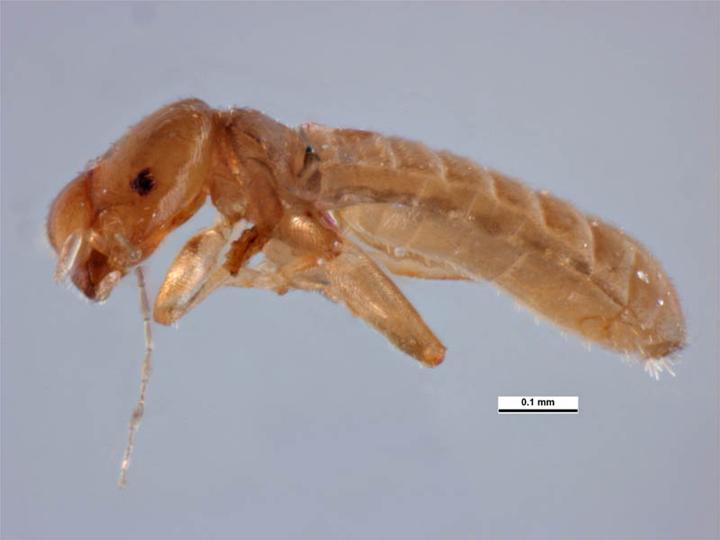
Booklice are often only 1–2 mm, pale and relatively large-headed. This is a representative species, not a human louse; distinguish it from mites.
Damage and signs
They favor warm, damp, undisturbed places and feed on mould and sometimes starchy materials. Their presence in food areas requires a contamination assessment.
Where to inspect
Check carton layers, bag mouths, pallet undersides, corners and condensation spots. Measure local humidity rather than only beside the dehumidifier.
Response
Correct leaks and condensation, remove mouldy residues, improve airflow around stacks and maintain drying. Log humidity and insect counts; quality staff decide product release.
Role of humidity control
Moisture control matters, but a drier room average can conceal damp corners or packaging.
Representative image, not a final identification. Hold suspect food lots, retain samples and involve quality staff. Qualified specialists should perform fumigation; do not apply household insecticides directly to food.
Temperature, humidity, reduced activity and mortality
Reduced movement, inhibited development and death have different thresholds. Species, life stage, product-core temperature and exposure time matter. RH means relative humidity.
- Cold and activity
- One L. bostrychophila experiment estimated an immature-development lower threshold near 15.5°C. Development is inhibited near/below this value; it does not mean all movement stops or insects die.
- Dryness and activity
- Sustained 50% RH or lower is a dehumidification-management reference for booklice, not an instant inactivity threshold. Seams, cartons and product interiors must also stay dry.
- Cold-treatment reference
- General household guidance for small packages of dry food: freeze at −18°C (0°F) or colder for at least 4 days. Allow the whole package to become fully cold. Thick bags, pallets and bulk grain require validated core temperatures and exposure times for the relevant stages. Refrigeration at 4°C or 0°C does not guarantee complete mortality.
- Can low RH kill?
- Laboratory conditions at 30°C: all L. bostrychophila stages died after 12 days at 43% RH or 14 days at 50% RH. Across three other tested booklouse species the respective ranges were 8–12 and 10–16 days. These results do not guarantee whole-warehouse or damp-package control.
Sources
University of Maryland Extension, University of Minnesota Extension
Temperature and humidity section: AHDB, Cooling targets for grain storage; FAO stored-product ecology (historical Howe population table); University of Minnesota Extension, Pantry pests; Ocran et al. (2021), Journal of Economic Entomology 114(3):1380–1388, doi:10.1093/jee/toab066; Wang et al. (2000), Annals of the Entomological Society of America 93(2):261–270.
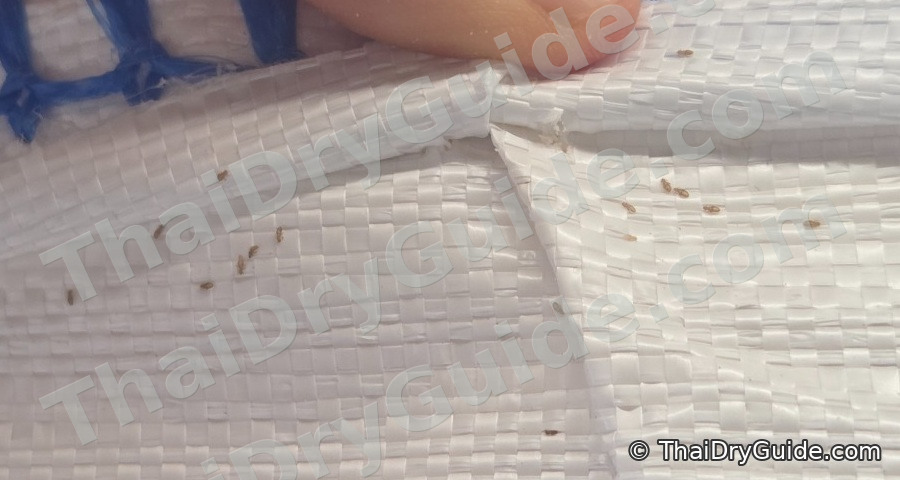
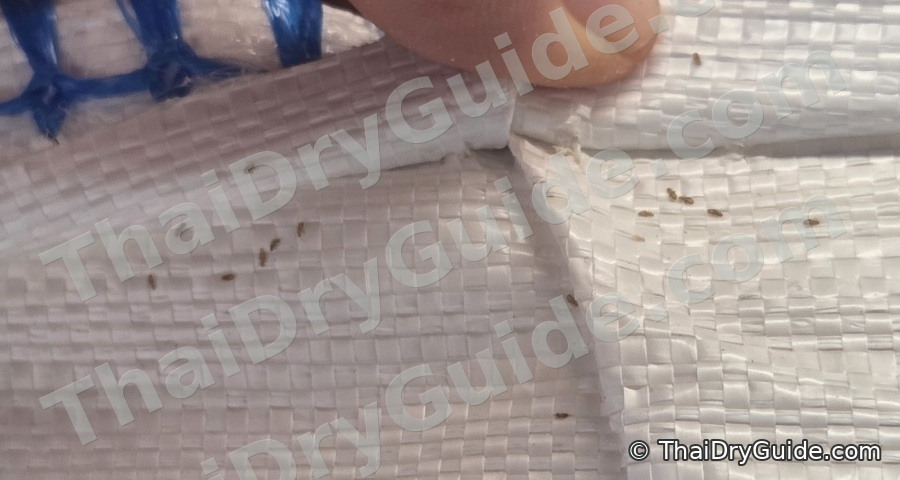
Booklice found in the warehouse
Not sure which insect it is? Use the pest prevention assistant →